
A Class IX or X student may sit down with good intentions, open three books, scroll through a timetable and still feel unsure where to begin. At home, that uncertainty can quickly become tension. Parents see the pile of unfinished work and want to help. Students hear another reminder and feel further behind.
This is common. The answer is rarely a tougher schedule. Stronger board-exam habits grow from a routine a student can repeat: know the next task, work without constant switching, check what is understood and return to gaps before they become frightening.
Why Should Good Study Habits Start in Class 9?
Class IX is a useful rehearsal year. Students learn how each subject asks them to think, how long a chapter really takes and what happens when revision is left too late. Class X then asks for more independence under a fixed examination calendar.
A plan that demands every evening will usually collapse after one busy day. A calmer plan leaves room for school, travel, family life and an occasional difficult topic. It also makes progress visible. A child who can say “I finished two questions and found one gap” has a much clearer starting point than a child told only to “study harder”.
5 Study Habits That Help With Class 10 Board Exam Preparation
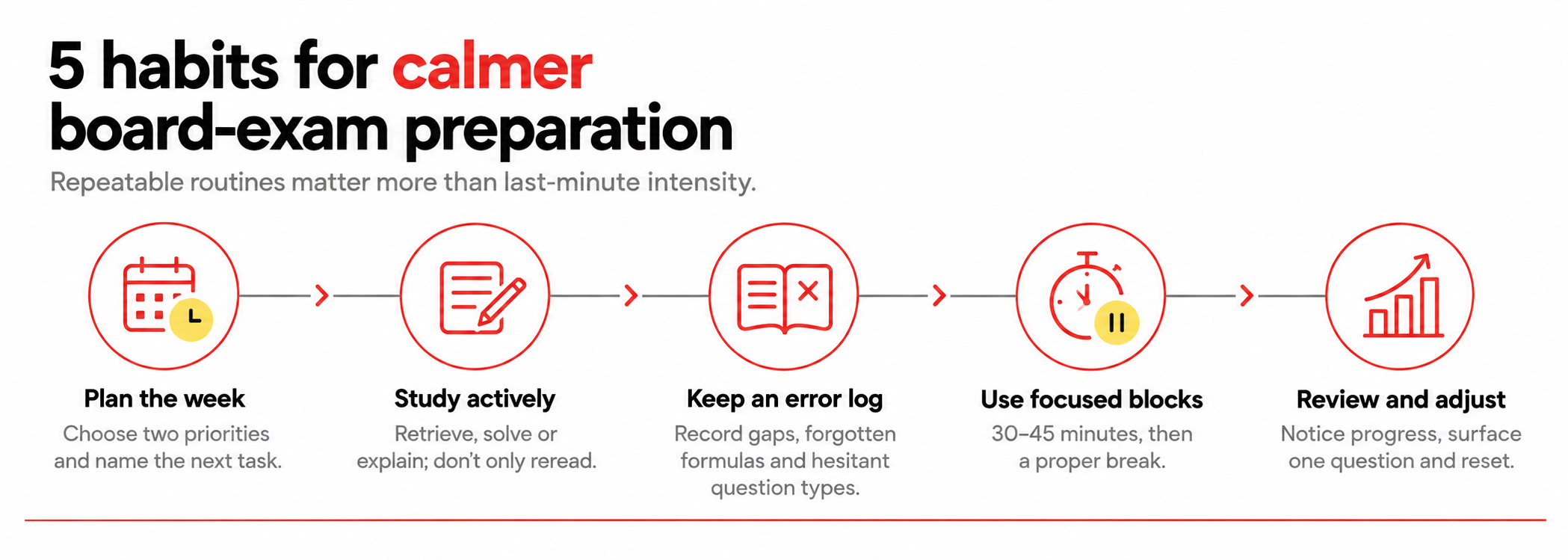
Begin with the habits below. They are deliberately simple because they need to survive ordinary school weeks, not just motivated Sundays.
Plan the week, not every minute. A Sunday or Monday check-in can list upcoming tests, unfinished classwork and two priority areas. Then convert each priority into a task: solve ten algebra questions, make a retrieval sheet for one science chapter or write one timed answer.
Study actively. Reading a chapter can be a useful first pass, but the student should then close the book and retrieve key ideas, solve a fresh problem or explain the topic aloud. The work becomes evidence, not a comforting page-turn.
Keep an error log. One notebook page headed “check again” can hold repeated mistakes, formulas that are forgotten and question types that cause hesitation. This gives the next revision session a purpose.
How to Make a Realistic Study Timetable for Class 9 and 10
A weekly plan should answer three questions: what must be completed, what needs practice and what can wait. Start with school deadlines. Add two focused revision priorities. Keep one lighter buffer session for a task that took longer than expected.
For many teenagers, a focused 30 to 45 minutes followed by a proper break is more useful than an undefined two-hour evening. The best duration is the one that produces thoughtful work and can be repeated. CBSE’s current examination guidance points students towards stress-free preparation, effective time management and study strategies rather than panic-led cramming.
At the end of the week, do a ten-minute review. Which subject moved forward? Which task stayed vague? What is one question to ask a teacher? This review is where a timetable becomes a learning tool.
How Can Parents Help With Class 10 Board Exam Preparation?
Many parents understandably step in when a child seems stuck. The most helpful role is usually structure with warmth. Help establish a consistent place, basic materials and a simple start time. Then keep the ownership with the student.
Use questions that invite planning: “What are you starting with?” “What would make this chapter clearer?” “Would it help to ask your teacher tomorrow?” Avoid turning every check-in into a mark discussion. A teenager needs room to name a difficulty before they can solve it.
Sleep belongs in the study plan. The American Academy of Pediatrics notes that adolescents need 8–10 hours of sleep, and links adequate sleep with memory, school performance and wellbeing. A late-night revision habit that repeatedly leaves a child exhausted is not a sustainable strategy.
Study Habits That Can Make Board Exam Preparation Harder
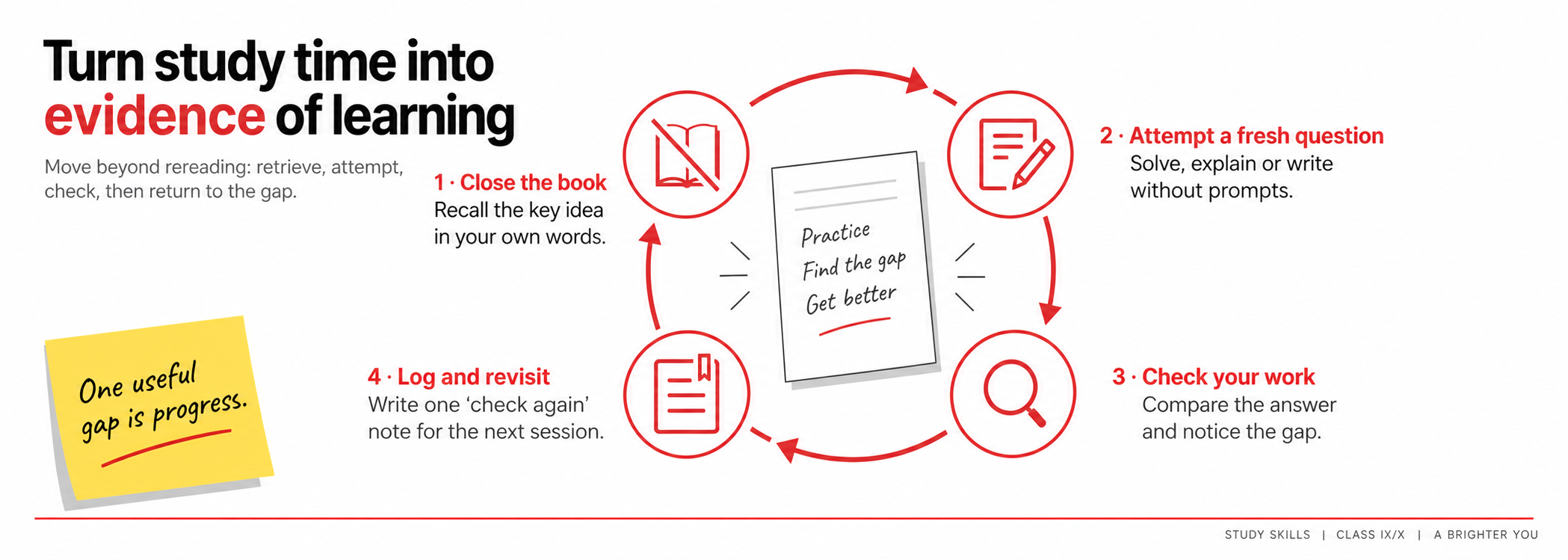
The first is planning by wishful thinking: writing six subjects into one evening and calling the rest a failure. The second is confusing activity with learning: copying notes, highlighting every line or watching explanation after explanation without attempting a question. The third is hiding confusion. One unclear step in maths or one misunderstood idea in science becomes larger when it is not surfaced.
Another trap is comparison. A classmate’s coaching schedule or late-night routine is not automatically the right model for your child. Look at the quality of their work, their mood and whether the plan is making them more independent. That is the useful measure.
How Do You Know if Your Child Needs Extra Academic Support?
Ask early when effort is steady but understanding is not improving, when a child repeatedly avoids one subject, or when worry is affecting sleep and everyday life. Begin with the subject teacher. Bring a few examples of completed work and specific questions. A short, clear conversation is more useful than waiting for a crisis.
Dhruv Global School, a CBSE school with campuses in Nande, Undri and Sangamner, approaches learning as more than test preparation. Children benefit when teachers, families and students can identify a learning gap early and agree on one manageable next step.