A child may ask at the most ordinary moment.
Perhaps you are driving home after visiting a relative. Perhaps they spot a dead insect on the balcony. Perhaps they hear adults speaking quietly and ask, “Where has Nana gone?”
Your first instinct may be to find the softest possible words.
Here is the most important thing to know before reading any further: young children do not need a perfect explanation of death. They need a calm, truthful adult who will stay with them through the question.
For kids, death is a very big idea. They may not understand that it is permanent. They may ask the same question many times. They may cry, then ask for a snack, then play happily with blocks. None of this means they did not love the person or animal who died.
It means they are learning in small, manageable pieces.
The Quick Answer: What Should I Say?
You might say:
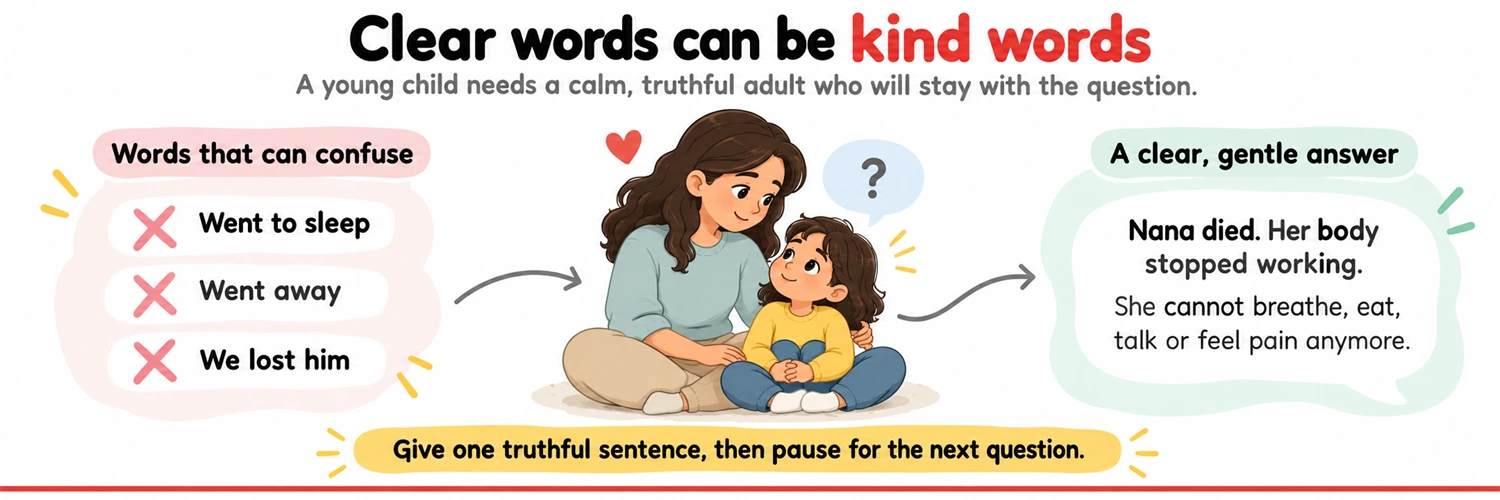
“Nana died. Her body stopped working, so she cannot breathe, eat, talk or feel pain anymore. We will miss her very much, and I am here to answer your questions.”
If the child asks where the person is, answer in a way that fits your family’s beliefs, while keeping the physical fact clear:
“Her body is not working anymore. In our family, we also believe that her love stays with us and we can remember her.”
The words “died” and “dead” can feel harsh to adults, but they are usually less confusing for young children than phrases such as “went to sleep”, “passed away”, “we lost him” or “went on a long journey”.
A child who hears “went to sleep” may become frightened of bedtime. A child who hears “went away” may worry that a parent who leaves for work will not return.
Clear words can be kind words.
Why Children Ask the Same Questions Repeatedly
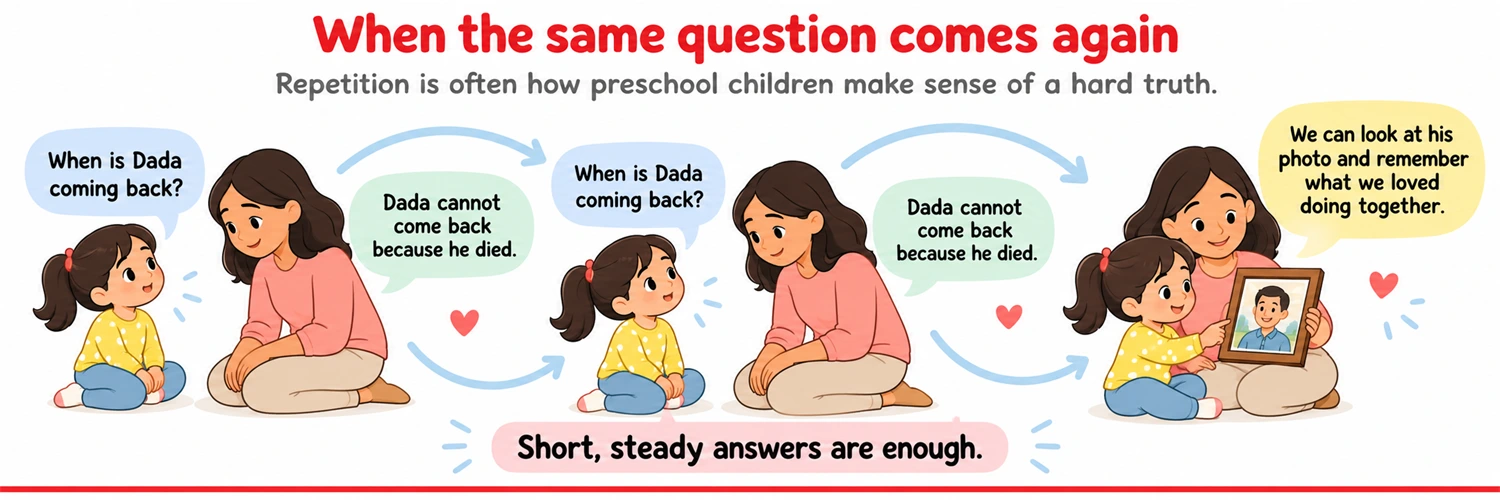
A four-year-old may ask, “When is Dada coming back?” even after you have explained that he died. The next day, they may ask exactly the same thing.
This is not defiance or inattention. Preschool children are still learning that death is permanent. Repetition is often how they slowly make sense of a hard truth.
Try answering calmly each time:
“Dada cannot come back because he died. We can still look at his photo and remember the things we loved doing with him.”
Do not feel you must give a longer explanation every time. Short, steady answers are enough.
Children may also ask practical questions that surprise adults:
- “Can Dada eat?”
- “Is he cold?”
- “Will you die?”
- “Who will take me to preschool?”
- “Can my teddy die?”
These are not insensitive questions. They are a child’s way of understanding what death means in daily life.
Answer what they have actually asked. Pause. Then let them lead the next question.
“No, when someone dies, their body does not need food or feel cold.”
“I expect to be here to care for you for a very long time. There are many adults who love you and would look after you too.”
How Do Young Children Grieve?
Adults often expect grief to look like tears. For children, it may look very different.
A child may become clingier at drop-off, have more bedtime worries, play “funeral” with toys, become angry over a small frustration, or suddenly talk about the person while eating poha at breakfast. They may seem unaffected at one moment and deeply sad at another.
That back-and-forth is common.
| What can be normal | What may need extra support |
|---|---|
| Asking repeated questions | Intense distress that does not ease over time |
| Wanting more cuddles or reassurance | Ongoing inability to sleep, eat or play |
| Temporary toileting or sleep regression | Persistent panic about separation |
| Moving quickly from sadness to play | Talk about wanting to die or join the person |
| Talking about death in play | Major behaviour changes that disrupt daily life for weeks |
Grief does not follow a neat timetable. Still, if you are worried, trust that feeling. Speak to your child’s paediatrician or a qualified child mental-health professional.
What to Say When You Don't Know the Answer
It is completely acceptable to say:
“That is a very important question. I am not sure of the answer, but I will think about it with you.”
This is especially useful for spiritual questions:
- “Where do people go when they die?”
- “Can they see me?”
- “Will I die?”
- “Why did God let this happen?”
Families hold different religious and cultural beliefs. You do not need to choose between honesty and faith. You can separate what is known from what is believed:
“We know that when someone dies, their body stops working. Different people believe different things about what happens next. In our family, we believe…”
If relatives share a different view, the child can hear that too. The aim is not to make every adult agree. The aim is to make the child feel safe asking.
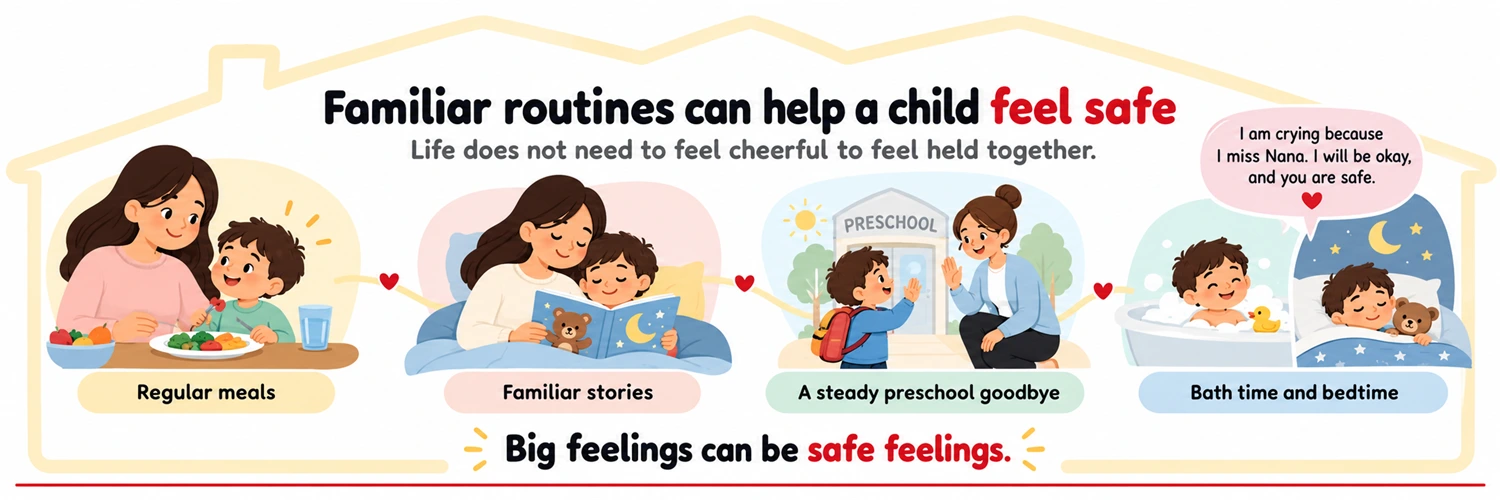
Use everyday routines to create safety
When a family is grieving, routines can feel unimportant. Yet regular meals, familiar stories, preschool attendance where appropriate, bath time and predictable goodbyes can give a child a sense that life is still held together.
You do not need to act cheerful. In fact, it can help a child to see you feel sad and cope with it.
Try saying:
“I am crying because I miss Nana. Grown-ups cry when they feel very sad. I will be okay, and you are safe.”
This teaches an important lesson: feelings can be big without being dangerous.
At Dhruv Preschool, part of the Dhruv Group of Schools, with branches across Pune, teachers understand that a child who has experienced a loss may need a little more gentleness at arrival, a familiar adult nearby, or a quiet moment during the day. Let your child’s teacher know what has happened and share any words your family is using.
You do not need to share every private detail. A simple message is enough:
“Someone important in our family has died. My child may be more emotional or ask questions. Please let us know if they seem unsettled.”
Home and preschool can then offer the child the same steady message: you are safe, your feelings are welcome, and there are adults here to help.
Should A Young Child Attend A Funeral?
There is no single right answer.
Some children benefit from being included in a goodbye ritual. Others may find it overwhelming. What matters most is preparation and choice.
If you are considering taking your child, explain simply what they may see:
- who will be there
- whether people may be crying
- what the ceremony will involve
- who will stay with them
- that they can leave with a trusted adult whenever they want.
Never force a child to touch the body, view the body, speak, pray or participate in a way that scares them.
A child who does not attend can still be included meaningfully. They might draw a picture, choose flowers, light a candle with an adult, help make a memory box, or listen to stories about the person.
Simple Ways To Remember Someone Who Died
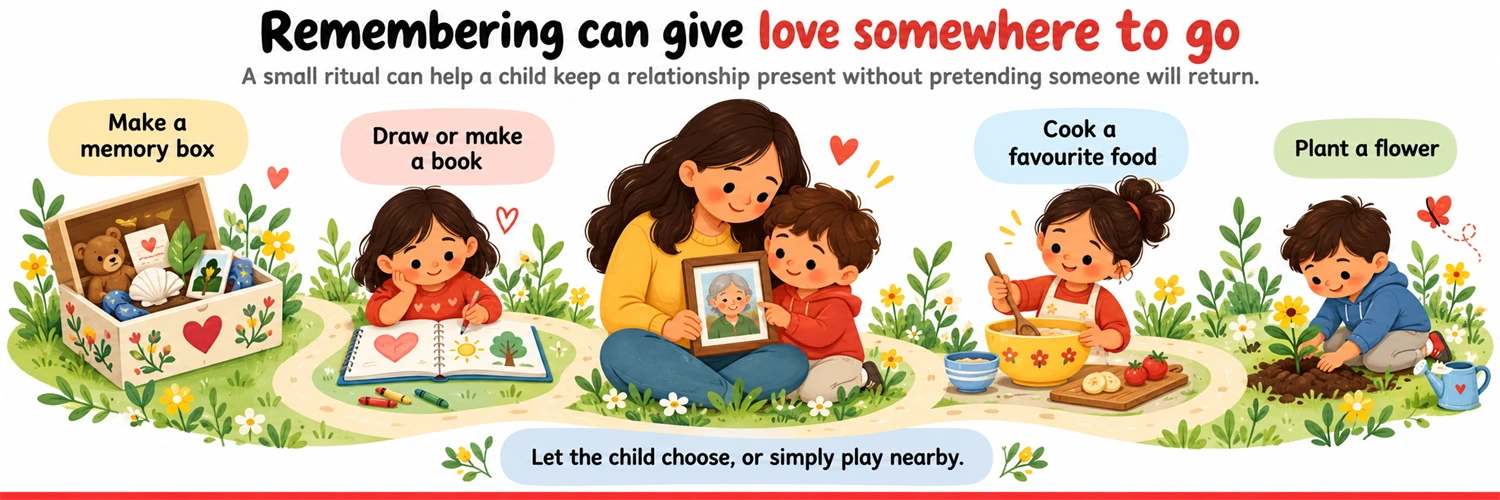
Memory activities give children a safe way to keep a relationship present without pretending the person will return.
You could:
- make a small memory box with photos, a card, a familiar scent or a drawing
- create a “things we remember about…” book
- cook the person’s favourite food together
- plant a flower or small tree
- say their name naturally in family conversations
- look at photographs when the child asks
- mark birthdays or special days with a simple family ritual
Things That Sound Comforting But Can Confuse A Child
| Try to avoid | Why it can be difficult | Try instead |
|---|---|---|
| “She went to sleep.” | Can create fear of sleep | “She died. Her body stopped working.” |
| “We lost him.” | A child may expect him to be found | “He died and cannot come back.” |
| “God took her.” | May create fear that God takes loved ones | “She died because her body was very ill.” |
| “Be brave. Do not cry.” | Can make feelings feel unacceptable | “It is okay to cry. I am with you.” |
| Long adult explanations | Can overwhelm a young child | Give one truthful sentence, then pause |
How Do You Explain the Death of a Pet to a Child?
For a preschool child, the death of a pet can be their first real experience of loss. Avoid saying the pet “ran away” if it died. Children may wait for it to return.
Try:
“Milo died. His body stopped working, and he cannot come home now. We will miss him. Would you like to make a picture of him?”
A small farewell ritual can help: a drawing, a photo, a flower, or a story about a favourite memory.
The loss may seem small to adults, but it can feel enormous to a child.
Final Thoughts
A child does not need you to make death make sense. They need you to make their questions safe.
You can use plain words. You can cry. You can say, “I do not know.” You can return to the question tomorrow.
Each calm, honest answer tells your child something larger than the answer itself: hard things can be spoken about, and they do not have to carry hard feelings alone.
FAQs
2. My child keeps asking whether I will die. What do I say?