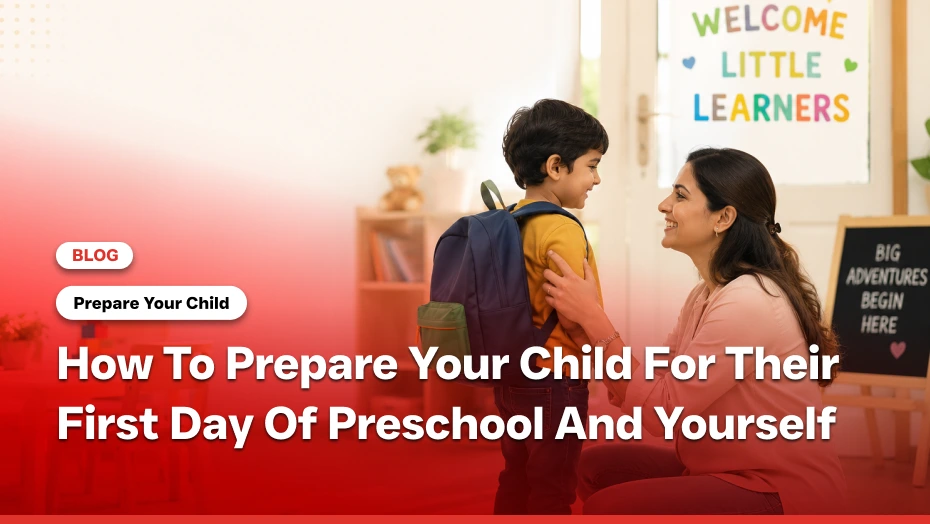
Starting preschool is one of the biggest milestones in a child’s early years. For many families, it is the first time a child steps into a structured environment away from home. Naturally, this moment brings excitement, curiosity, nervousness, and emotional adjustment, not only for children but also for parents.
The first day of preschool marks the beginning of a child’s learning journey. It introduces them to new experiences, routines, friendships, environments, and emotions. While some children transition smoothly, others may need time to feel comfortable in unfamiliar surroundings. Parents, too, often experience mixed emotions ranging from pride and excitement to anxiety and emotional overwhelm.
This guide will help parents understand how to prepare both their child and themselves for the first day of preschool with confidence and calmness.
Why the First Day of Preschool Matters
The first preschool experience shapes a child’s initial relationship with learning and school environments. A positive beginning helps children:
- Build emotional confidence
- Develop social comfort
- Become more independent
- Adapt to routines
- Explore new experiences with curiosity
Children are naturally observant and emotionally sensitive. They often absorb the emotions of adults around them. When parents approach preschool positively and calmly, children are more likely to feel secure and reassured.
The transition may seem simple from an adult perspective, but for a young child, preschool represents a major life change. They are entering a new space filled with unfamiliar people, routines, sounds, and expectations. Preparing gradually helps reduce anxiety and builds emotional readiness.
Start Talking About Preschool Early
One of the best ways to prepare your child is by introducing the idea of preschool positively and gradually.
A few weeks before school begins, start talking about:
- What preschool is
- What children do there
- How they will meet teachers and friends
- Activities they may enjoy
- Playtime, storytelling, music, and art
Keep conversations light, cheerful, and reassuring.
For example, instead of saying:
“You have to go to school now.”
Try saying:
“You’re going to have so much fun meeting new friends and exploring new activities.”
Children respond strongly to tone and emotional cues. Presenting preschool as an exciting adventure helps build anticipation instead of fear.
Visit the Preschool Before the First Day
Seeing the environment beforehand helps children become familiar with:
- Classrooms
- Play areas
- Teachers
- Entry and exit routines
- Surroundings
When children know what to expect, they feel more secure during the actual transition.
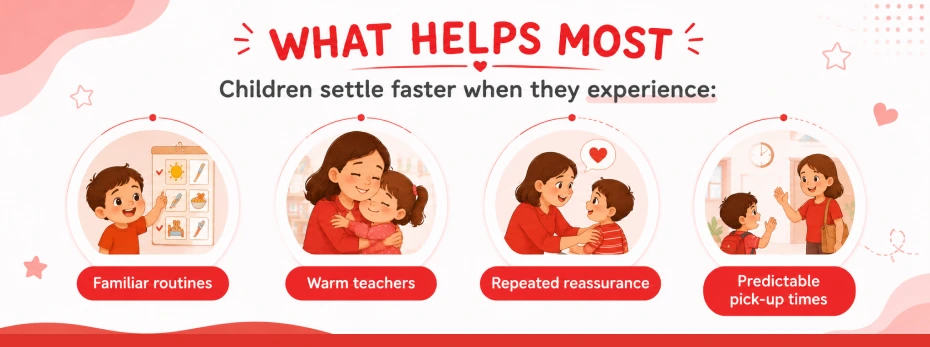
Creating a warm, welcoming, and child-friendly environment is an important part of helping children settle comfortably into their new routine.
Establish a Predictable Routine
A few weeks before preschool starts, begin gradually adjusting:
- Wake-up time
- Meal schedules
- Nap routines
- Bedtime habits
A consistent routine helps children:
- Feel emotionally secure
- Transition smoothly into school timings
- Become physically prepared for the school day
Adequate sleep is especially important because overtired children often struggle more with emotional regulation and separation anxiety.
Morning routines should ideally feel calm rather than rushed. A peaceful start helps children begin the day with confidence.
Encourage Small Moments of Independence
Encourage your child to practice:
- Wearing shoes independently
- Washing hands
- Eating without assistance
- Packing small belongings
- Putting toys away
- Carrying their own water bottle or bag
The goal is not perfection. Even small achievements help children feel capable and confident.
Independence also teaches responsibility and builds self-esteem, both of which are important during the preschool transition.
Help Your Child Develop Social Comfort
For some children, preschool may be their first experience regularly interacting with peers.
You can help build social confidence by:
- Arranging playdates
- Visiting parks
- Encouraging sharing and turn-taking
- Practicing greetings and introductions
Simple experiences like interacting with other children in relaxed environments help improve comfort in group settings.
Children do not need advanced social skills before preschool. What matters most is helping them feel emotionally safe while gradually learning to engage with others.
Read Books About Starting School
Books about starting preschool help children:
- Understand what school feels like
- Normalize nervousness
- Visualize classroom experiences
- Build excitement about learning
Reading together also opens opportunities for conversations about feelings and expectations.
Ask gentle questions such as:
- “What do you think the classroom will look like?”
- “What activity would you enjoy most?”
- “Do you think the character felt nervous too?”
These conversations help children process emotions naturally.
Acknowledge Feelings Without Creating Fear
It is normal for children to feel nervous before preschool. Some may express excitement while others may become clingy, emotional, or quiet.
The most important thing parents can do is validate feelings calmly.
Instead of saying:
“Don’t be scared.”
Try saying:
“It’s okay to feel a little nervous. New things can feel different at first.”
This teaches children that emotions are normal and manageable.
Avoid introducing unnecessary anxiety by over-discussing fears or repeatedly asking:
- “Are you scared?”
- “Will you cry?”
- “What if you miss me?”
Children often mirror parental anxiety. Calm reassurance works far better than excessive emotional preparation.
Prepare Yourself Emotionally Too
Parents often underestimate how emotional the first preschool experience can feel.
Many parents experience:
- Separation anxiety
- Guilt
- Sadness
- Worry
- Emotional overwhelm
These feelings are completely natural.
For many families, preschool represents the first step toward a child’s growing independence. It can feel emotional watching your child enter a new phase of life.
However, children benefit greatly from seeing parents feel calm and confident.
Remember:
- Preschool supports emotional and social growth
- Independence develops gradually
- Temporary tears are normal
- Children usually adapt faster than parents expect
Trusting the process is important.
Practice Short Separations Before School Starts
If your child has rarely spent time away from you, gradual separation practice can help.
Start with short periods where your child stays with:
- Grandparents
- Trusted relatives
- Friends
- Activity groups
This helps children learn:
- Parents always return
- Separation is temporary
- They are safe even in new environments
Short positive experiences build emotional resilience before preschool begins.
Avoid Long Emotional Goodbyes
The first drop-off is often harder for parents than children.
While it may feel tempting to prolong goodbye moments, long emotional departures can increase anxiety.
Instead:
- Keep goodbyes short and warm
- Smile confidently
- Reassure your child calmly
- Create a simple goodbye ritual
For example:
“Have a wonderful day. I’ll see you after story time.”
Children feel more secure when parents appear confident and consistent.
Even if tears happen, most children calm down quickly once they engage in classroom activities.
Don’t Expect a Perfect Transition Immediately
Every child adjusts differently.
Some children settle immediately, while others may need:
- A few days
- Smile confidently
- A few weeks
- Gradual emotional adjustment
Common reactions during the early weeks include:
- Clinginess
- Mood changes
- Tiredness
- Emotional sensitivity
- Resistance during drop-off
These responses are often temporary and part of normal adjustment.
Patience, consistency, and reassurance are key.
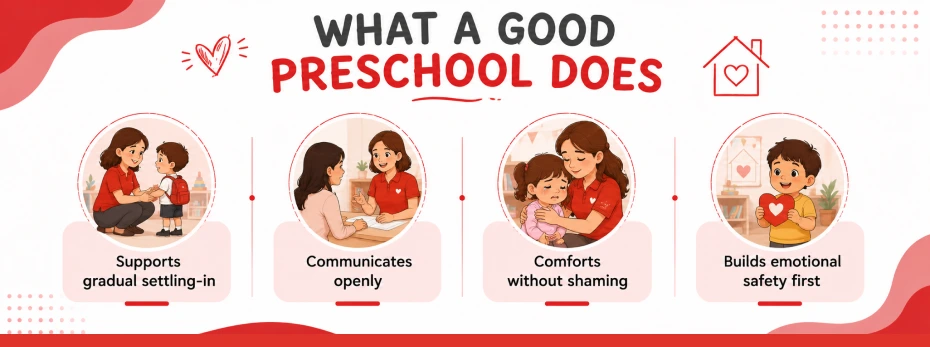
Focus on Emotional Safety More Than Academics
One common misconception about preschool is that it should primarily focus on academics.
In reality, early childhood education is most effective when children first feel:
- Safe
- Happy
- Connected
- Emotionally secure
Preschool is where children begin developing:
- Confidence
- Communication
- Curiosity
- Social interaction
- Emotional regulation
- Love for learning
Academic readiness naturally grows when emotional well-being is prioritized.
Build Positive Associations With School
Children form emotional associations quickly.
Simple positive habits can strengthen excitement around preschool:
- Let them choose a school bag
- Pack a favorite healthy snack
- Talk about enjoyable activities
- Celebrate small achievements
- Ask about fun moments after school
Instead of asking:
“Did you behave today?”
Try asking:
“What made you smile today?”
This encourages children to connect school with curiosity and positivity rather than pressure.
Be Patient With Yourself
Parents often feel pressure to manage every emotion perfectly during this transition.
The truth is:
- It is okay to feel emotional
- It is okay if drop-offs feel difficult initially
- It is okay if your child needs time to adjust
Preschool is a transition for the whole family, not just the child.
Give yourself permission to experience the process gradually too.
Trust that your child is developing important life skills:
- Confidence
- Independence
- Social comfort
- Emotional resilience
These early experiences lay the foundation for future growth and learning.
The Role of Preschool in Early Childhood Development
High-quality preschool environments do far more than prepare children academically.
They support:
- Language development
- Motor skills
- Emotional intelligence
- Social confidence
- Creativity
- Problem-solving
- Curiosity
- Cognitive growth
Children learn best through:
They support:
- Play
- Exploration
- Interaction
- Observation
- Conversation
- Hands-on experiences
A nurturing preschool environment encourages children to feel excited about learning rather than pressured by it.
Final Thoughts
The first day of preschool is a major milestone filled with growth, emotion, and new beginnings. While it is natural for both children and parents to feel nervous, thoughtful preparation can make the transition smoother and more positive.
The key is not to eliminate every fear or emotion, but to help children feel:
- Safe
- Supported
- Loved
- Encouraged
- Confident
Children thrive when they sense calm reassurance from the adults around them.
Preschool is not simply the beginning of formal education. It is the beginning of independence, friendship, self-discovery, and joyful learning.
At Dhruv Preschool, we are committed to making every child’s first school experience warm, meaningful, and nurturing, helping young learners take their first steps into the world with confidence and happiness.