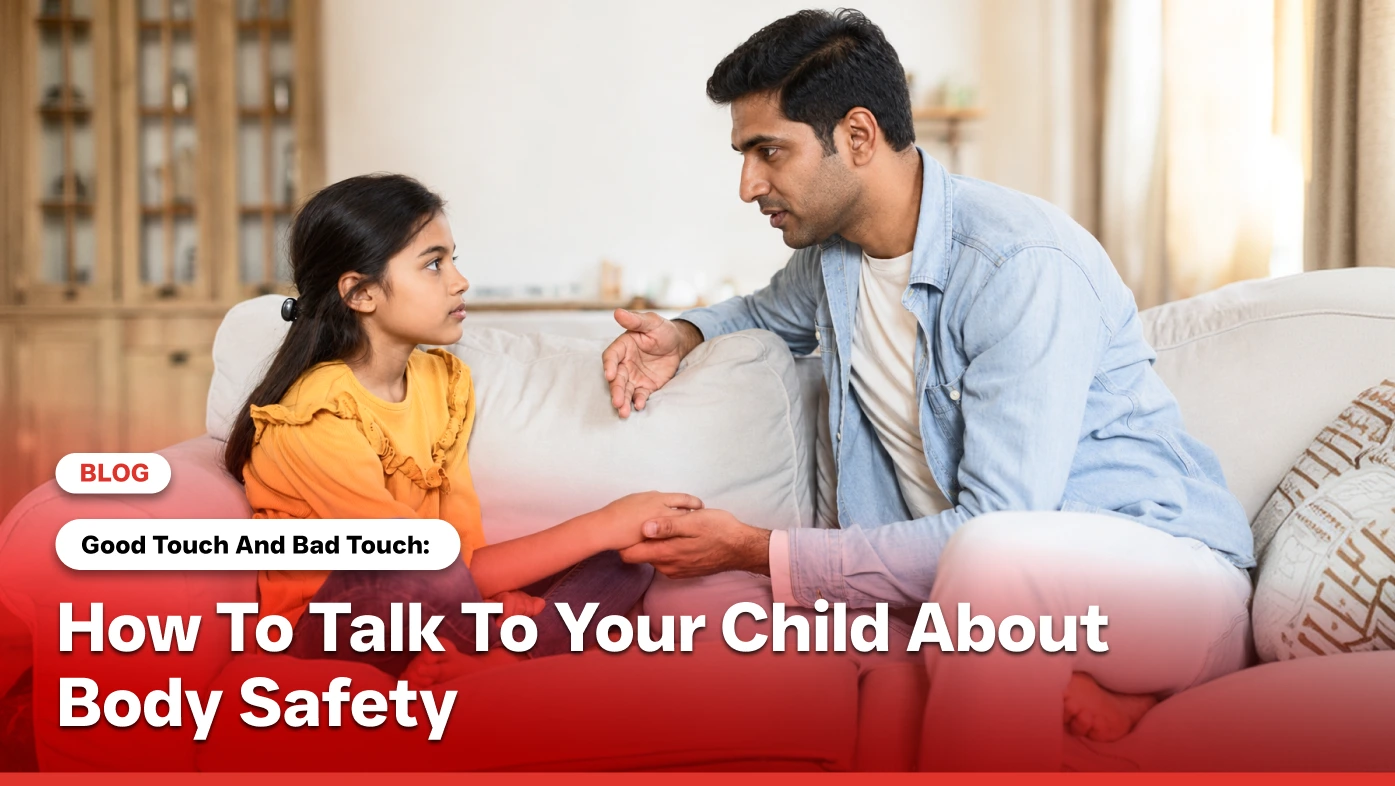
Most parents know this conversation needs to happen. Very few know how to start it.
It feels enormous. It feels like the beginning of the end of childhood innocence. It feels like introducing something frightening to a person who, up until now, has been blissfully unaware that the world contains things to be frightened of.
But here is what experienced early childhood educators and child safety experts consistently say: this conversation is not about fear. Delivered well, it is one of the most empowering things you can give a young child. It gives them language. It gives them permission. It gives them the quiet, confident understanding that their body belongs to them — and that certain things are never okay, no matter who is asking.
Children who have this conversation with their parents are not more anxious than those who have not. They are better equipped. And being equipped, having the words, knowing the rules, trusting that a trusted adult will listen is what matters.
This blog explains what to say, how to say it, and how to build the kind of relationship at home where your child will actually tell you if something is wrong.
Why Every Parent Should Talk About Body Safety Early
Many parents assume this conversation belongs to a later age, when children are older, when they can understand more, when it seems more immediately relevant.
The evidence points the other way.
Children aged three to five are at the developmental stage where they are forming their foundational understanding of bodies, boundaries, and relationships. They are also, statistically, at a period of significant vulnerability, the majority of child sexual abuse begins before the age of ten, and a disproportionate amount before the age of six.
Children at preschool age are concrete thinkers. They understand rules. They understand their bodies. They understand the difference between things that feel good and things that feel wrong. What they lack, until we give it to them, is the language to describe experiences, the permission to trust their instincts, and the certainty that telling a trusted adult will be met with care rather than dismissal.
The preschool years are precisely the right time to give them all three.
How to Start the Body Safety Conversation
The first conversation about body safety is not about strangers. It is not about abuse. It is not about anything frightening at all.
It begins with the body itself.
Teach your child the correct anatomical names for all body parts, including genitals. Penis. Vulva. Bottom. This is not about being clinical or uncomfortable. It is about giving your child accurate language that will serve them in two critical ways.
First, it removes the shame and secrecy that surrounds private parts when they are only referred to through nicknames and euphemisms. A child who has been taught that their genitals have a real name, like any other body part, understands implicitly that those parts are not shameful, they are simply private.
Second, if a child ever needs to tell someone that something has happened, accurate anatomical language makes them immediately and clearly understood. A child who says he touched my front bottom may not be understood. A child who uses correct terminology will be.
This step feels awkward to many parents. Do it anyway. Children handle it with far less difficulty than adults expect.
The Concept of Private Parts — Explained Simply
Once your child has the language, the concept is straightforward.
Some parts of your body are private. Private means they belong to you and only you. Nobody else should touch your private parts, the parts covered by your swimming costume, except to keep you clean and healthy. Your doctor might look at them with Mummy or Daddy there. Your parent might help you wash. That is it. Nobody else.
This is the rule. It is clear, it is simple, and it is within the cognitive reach of every three-year-old.
The swimming costume rule, private parts are the parts covered by a swimsuit is widely used in child safety education because it is concrete and immediately visual. Children understand it quickly and remember it reliably.
Good Touch, Bad Touch, and Confusing Touch Explained
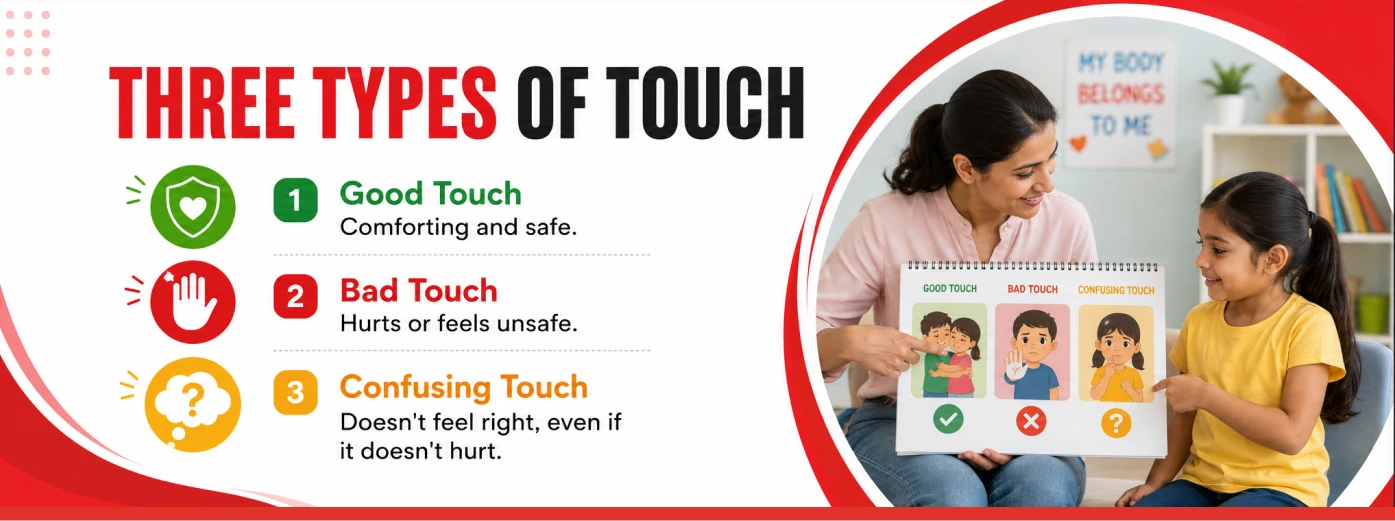
The good touch and bad touch framework is useful, but it has a limitation worth knowing about. Most child safety educators now add a third category: confusing touch. And it is the most important one.
Good touch is touch that feels safe and welcome — a hug from someone you love, a high five, a doctor examining you appropriately with a parent present.
Bad touch is touch that hurts or feels obviously wrong — being hit, being grabbed roughly.
Confusing touch is the category that most needs explanation. It is touch that might not hurt, might even feel physically okay, but that something inside you says is not right. It might come from someone familiar, someone you like, someone who has told you it is a secret. It might be accompanied by gifts, by special attention, by being told this is normal.
Children need to know about confusing touch specifically because most inappropriate touch does not come from strangers in the way the outdated stranger danger model suggested. It comes from people the child knows. People the child may like and trust. People who may have built a relationship with the child precisely to create confusion about what is acceptable.
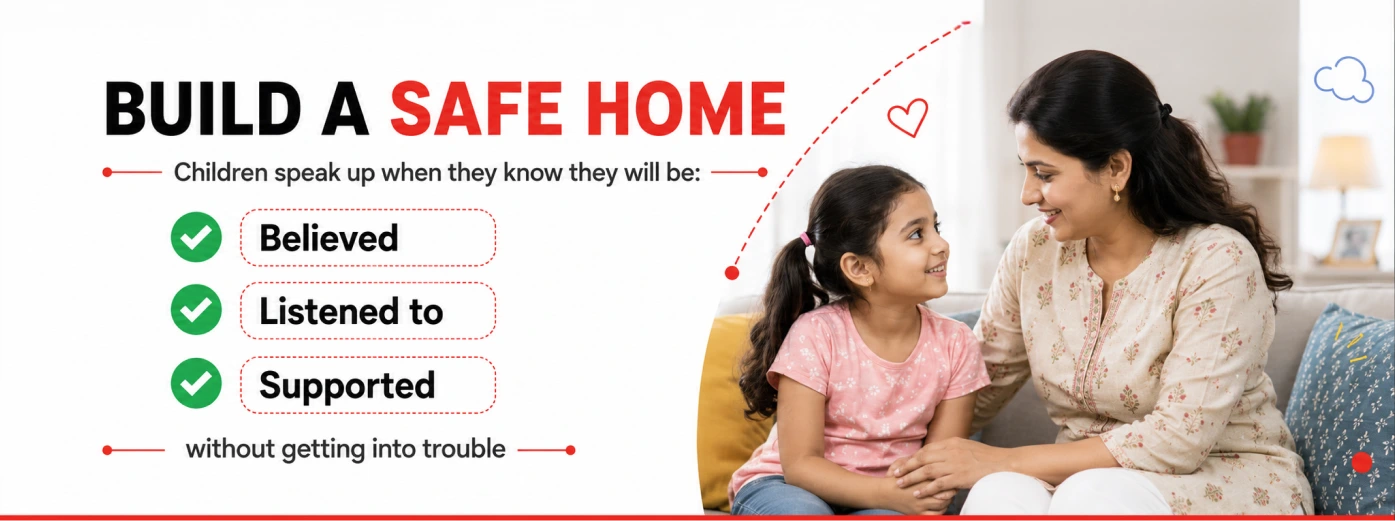
Tell your child: If someone touches you and something inside you feels strange or wrong, even if you like that person, even if they say it is okay that feeling is telling you something important. You can always tell me. You will never be in trouble.
Teaching Children About Body Autonomy
Body safety education rests on a principle that is both simple and quietly radical: your body belongs to you.
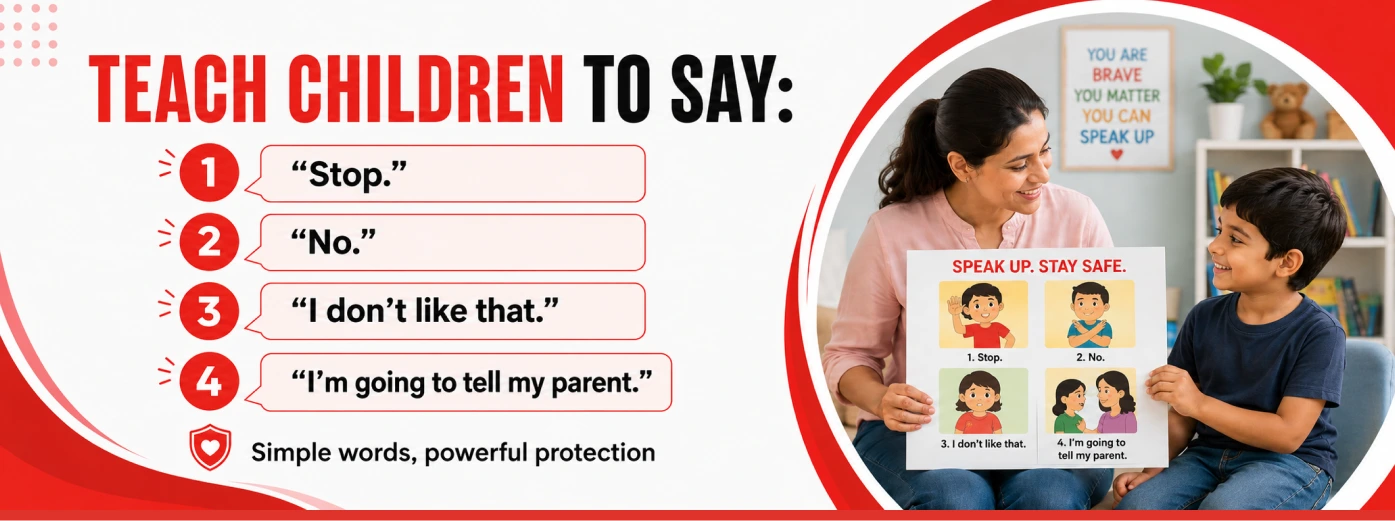
This means your child has the right to say no to any touch that makes them uncomfortable, including touch from relatives and family friends that is well-intentioned.
Many parents undermine this principle without realising it. Give Grandma a hug. Don’t be rude. Just a kiss, it will make them happy. These instructions, however warmly meant, teach a child that their discomfort with physical contact is less important than someone else’s feelings. That the right thing to do when they do not want to be touched is to override that feeling to please an adult.
That is precisely the wrong lesson for body safety.
You do not have to ban affection with extended family. You can offer alternatives. You don’t have to hug if you don’t want to. Would you like to wave or give a high five instead? This small shift does something significant. It teaches your child that their instincts about their own body are valid and worth respecting. That they have agency. That no is a complete sentence when it comes to their own physical comfort.
A child who has learned that their discomfort with touch matters at home is a child who is far more likely to trust that instinct in a situation that actually matters.
The No Secrets Rule
This is the rule that does the most protective work of any single concept in body safety education.
We do not keep secrets about bodies or touches. Ever.
Children need to understand the difference between a surprise and a secret. A surprise is something that will be shared soon, a birthday present, a party being planned. A secret is something that is supposed to stay hidden forever. Surprises are fine. Secrets about bodies and touches are never okay.
Teach your child: If anyone ever asks you to keep a secret about your body or about a touch, even someone you love, even someone who says you will get in trouble if you tell, that is the one secret you must always, always tell me.
Adults who harm children almost always use secrecy as a tool. They say: This is our special secret. You will get in trouble if you tell. Nobody will believe you. The no secrets rule directly dismantles this. A child who has been explicitly taught that secrets about bodies must always be told has been given the most powerful protective tool available.
What to Do If Your Child Tells You Something Concerning
This section is for the possibility that the conversation you start leads somewhere unexpected.
If your child tells you something about a touch, about something that happened, about a secret they were asked to keep, the most important thing you can do in that first moment is stay calm. Your visible reaction will determine whether they continue.
Do not express shock. Do not ask leading questions. Do not say anything that places doubt on what they have told you. Say: Thank you for telling me. You did the right thing. This is not your fault. I am going to make sure you are safe.
Then, immediately seek guidance from a professional. A child protection specialist, a paediatrician, or the relevant authorities in your area. Do not attempt to investigate the situation yourself. Do not confront the person your child has named. Do not ask your child to repeat the details multiple times. The repetition of trauma details is harmful, and it can compromise any formal process that follows.
Your role in that moment is not to investigate. It is to believe, to protect, and to connect your child to the people who are equipped to help.
How to Keep the Body Safety Conversation Going
One conversation is not enough. Body safety is not a topic to cover once and consider done.
It is a thread, woven through regular, low-pressure moments that builds, gradually, the understanding and the confidence that protection requires.
Read books together. There are excellent picture books for preschool-age children on body safety: My Body Belongs to Me by Jill Starishevsky, No Means No! by Jayneen Sanders, and Some Secrets Should Never Be Kept by Jayneen Sanders are widely recommended by child safety educators. Reading together gives both of you a shared language and a natural way to revisit the concepts without it feeling like a lecture.
Answer questions honestly. Preschoolers ask questions about bodies with the same casual curiosity they bring to questions about dinosaurs and cloud formation. Answer them in the same spirit. Calm, factual, age-appropriate. The parent who responds to body questions with discomfort teaches their child that bodies are a source of shame. The parent who responds calmly teaches them that bodies are simply bodies and that their parent is someone they can talk to about them.
Check in periodically. Not with anxiety, not has anything happened?, but with the kind of gentle, open questions that keep the channel available. Do you know what to do if something ever feels wrong? Do you know you can always tell me anything? The repetition of permission is not paranoia. It is maintenance.
Final Thoughts
Every parent hopes their child will never need this conversation. But body safety is much like teaching a child to wear a seatbelt or look both ways before crossing the road. We do not have these conversations because we expect something bad to happen. We have them because preparation is one of the most powerful forms of protection.
When body safety is introduced calmly, without fear or shame, children learn something far more valuable than a list of rules. They learn that their body belongs to them, that their feelings matter, and that the adults they trust will always listen without judgement.
The goal is not to make children suspicious of the world. It is to help them move through it with confidence, self-awareness, and the knowledge that they can always speak up if something feels wrong.
At Dhruv Preschool, we believe that keeping children safe goes hand in hand with helping them grow into confident, secure, and emotionally aware individuals. When schools and parents work together to build trust, encourage open conversations, and respect children’s boundaries, we create an environment where every child feels protected, valued, and empowered.