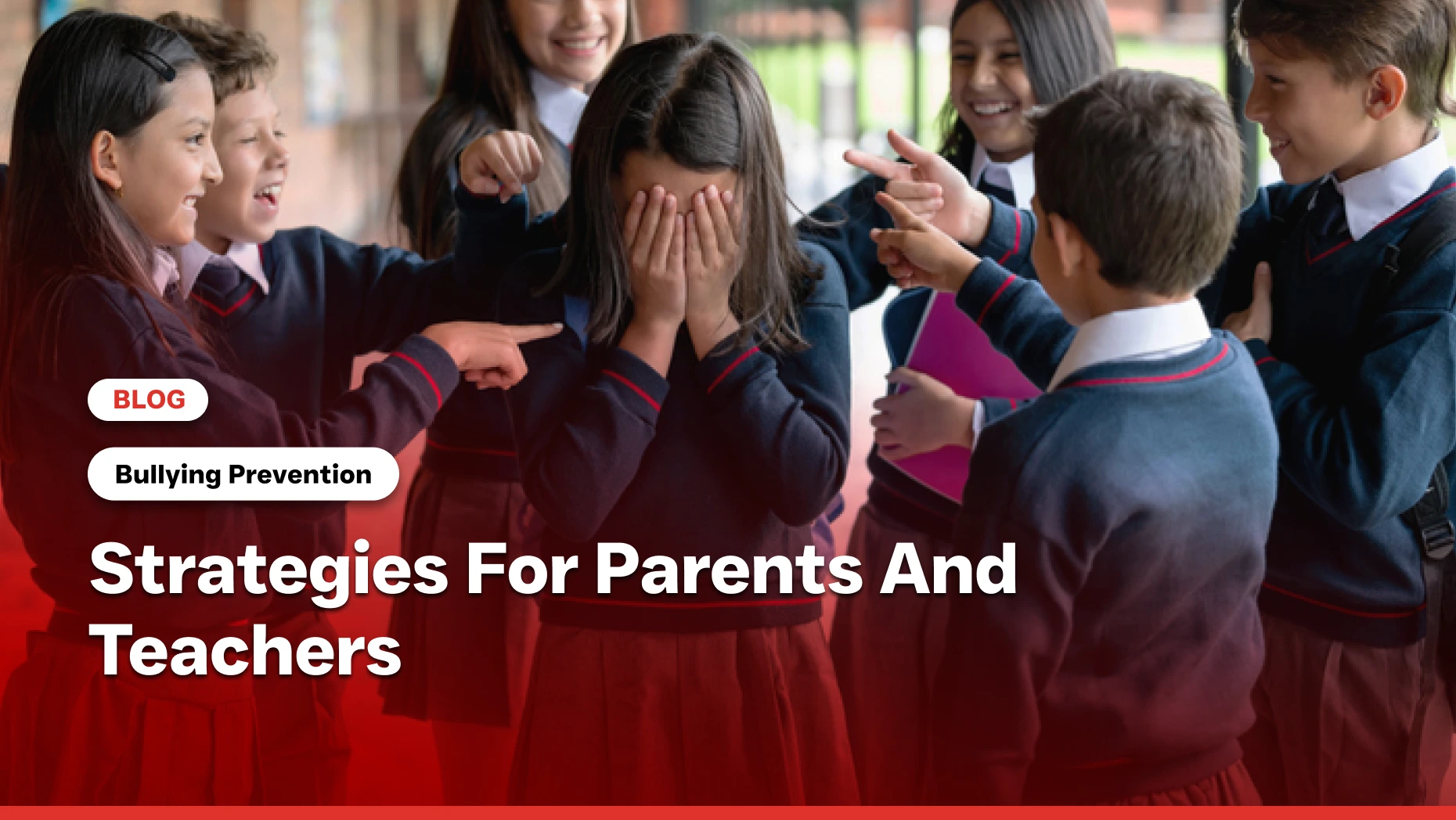
Most conversations about bullying begin too late. They begin when a parent notices their child has stopped wanting to go to school. Or when a teacher catches something in the corridor that has clearly been going on for longer than anyone knew. Or when something surfaces online that reveals a dynamic between children that the adults around them had not seen coming.
By the time bullying is visible enough to be named, it has usually been happening for a while. The child being bullied has spent weeks, sometimes months, managing it alone, weighing whether to say something, calculating whether speaking up will make things better or worse. And in many cases, they have concluded that staying silent is the safer option.
This is the part of the bullying conversation that matters most and gets discussed least: the gap between when bullying begins and when adults find out about it. Prevention lives in that gap. And closing it requires both parents and teachers to understand what bullying actually is, what it actually looks like, and what the school and home environments that prevent it have in common.
What Bullying Really Is And What It Isn’t
The word bullying is used loosely, and that looseness creates problems. When everything is called bullying, nothing gets the specific response it needs. When too little is called bullying, genuine harm goes unaddressed.
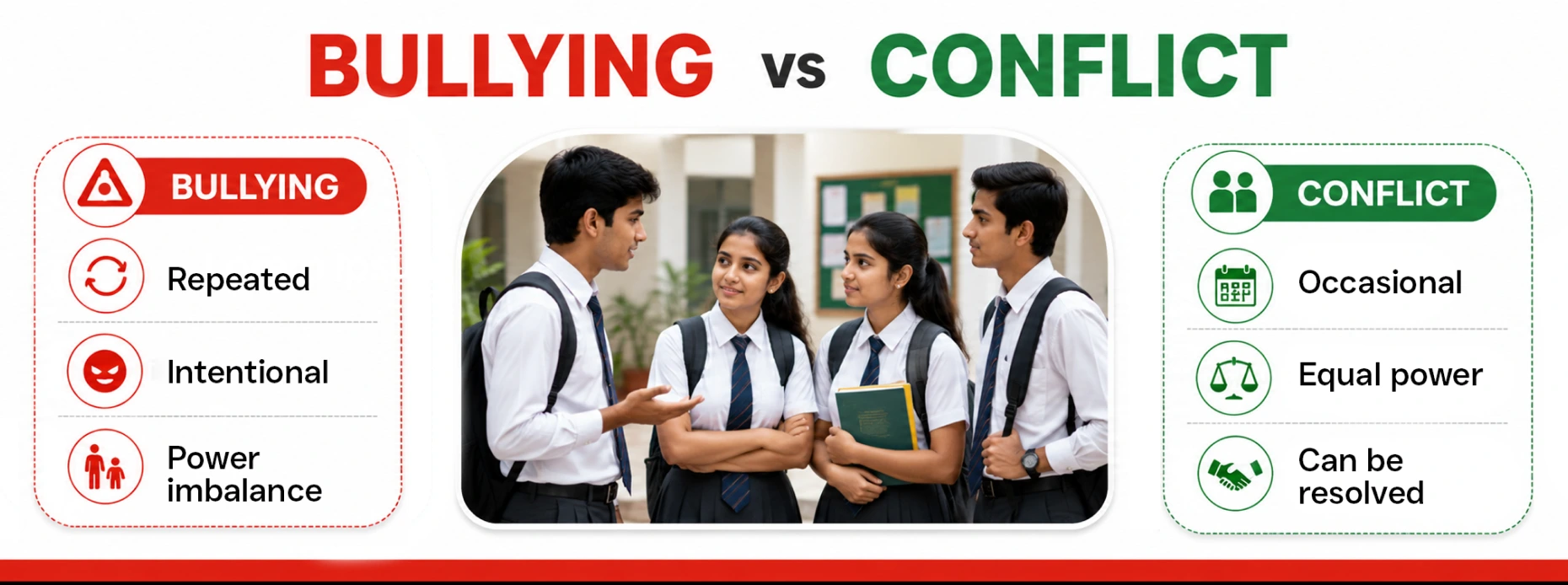
Bullying is not a single incident. A child who pushes another child once in a moment of frustration is not a bully. Two children who fall out over a game and say something unkind to each other are having a conflict. Conflict is a normal, unavoidable part of school life, and learning to navigate it is one of the most important developmental tasks children face.
Bullying is specifically characterised by three elements that distinguish it from ordinary conflict: it is repeated, it is intentional, and it involves an imbalance of power. The target of bullying cannot easily make it stop. There is something, social status, physical size, group dynamics, access to information that can be used as leverage that gives the person doing the bullying an advantage the target does not have.
That power imbalance is why bullying causes harm that ordinary conflict does not. A child who loses a friendship fight can move on. A child who is bullied is trapped, at least in their own perception in a situation they cannot resolve through normal social means. That feeling of helplessness, repeated over time, is where the most significant psychological damage occurs.
Bullying takes several forms that are not always obvious to adults. Physical bullying is the most visible. Verbal bullying, name calling, mockery, humiliation in front of others is extremely common and frequently dismissed as just words. Relational or social bullying, deliberate exclusion, rumour-spreading, manipulation of social groups to isolate a target is among the most common forms in middle and upper school and the hardest for adults to see because it leaves no physical evidence and often happens without a single word being exchanged. Cyberbullying has added a dimension that previous generations of educators and parents did not have to manage: the cruelty that once ended at the school gate now follows children home, into their bedrooms, into the hours that used to be safe.
Why Children Often Don’t Tell Adults About Bullying
Before we talk about what adults can do, it is worth sitting with the most difficult question: why do children who are being bullied not ask for help?
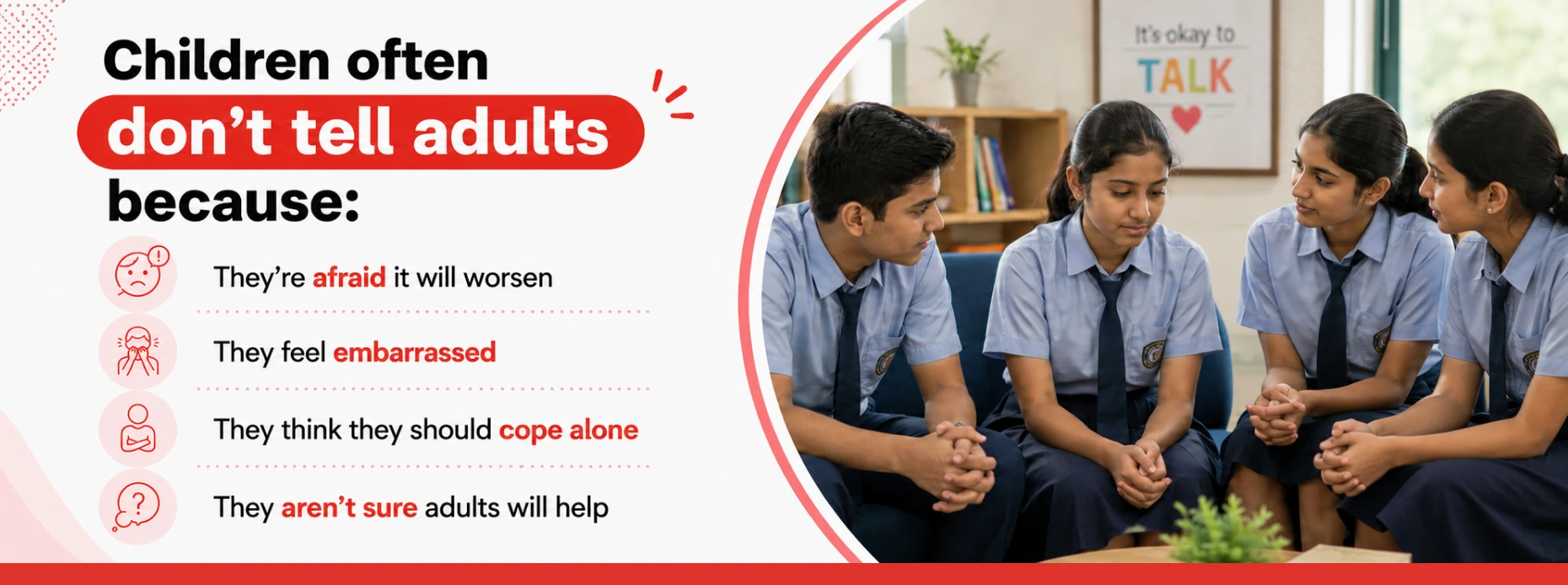
The answers are consistent across research and across cultures. Children do not tell because they are afraid it will get worse. They have seen or heard what happens when adults intervene badly: the bully is spoken to, the bully knows who told, and the situation escalates. They do not tell because they have internalised some version of the idea that needing help makes them weak, or that handling it themselves is the expectation. They do not tell because they are ashamed, not of the person doing the bullying, but of themselves, for being a person that this is happening to. And they do not tell because they genuinely are not sure that the adults in their life will respond in a way that helps rather than hurts.
That last point is the one adults find hardest to hear, and the one that most demands reflection. A child’s decision about whether to tell is a risk assessment. If that risk assessment consistently produces it is safer not to, the problem is not the child’s reluctance. It is the environment that made silence feel like a reasonable choice.
Creating an environment where speaking up feels safe is not a single intervention. It is a culture and it is built, slowly, by everything that happens every day in classrooms and in homes.
Bullying Prevention Strategies for Teachers
The school environment is where bullying most often occurs, and where the conditions that prevent it are most directly shaped. Teachers do not create bullying. But they do create or fail to create, the classroom culture that makes it more or less likely to take hold.
Create a Classroom Where Every Child Feels Seen
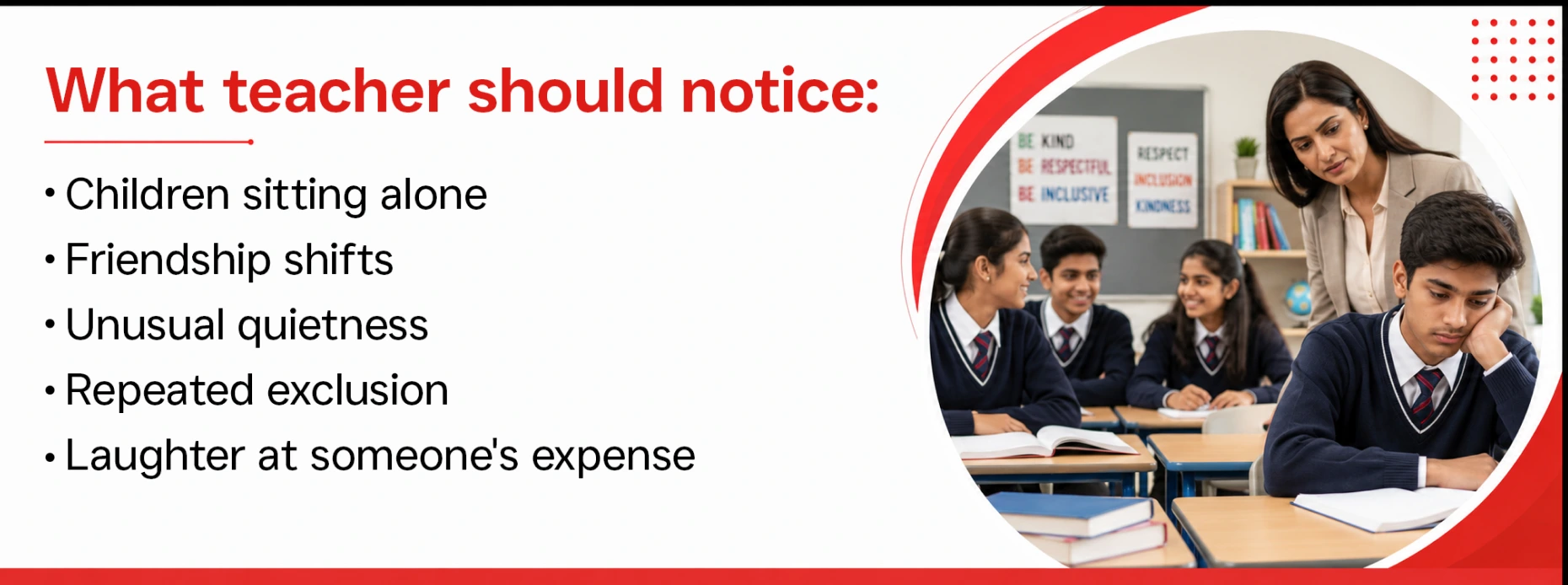
Bullying thrives in social invisibility. The child who has no real social traction in a classroom, who is neither liked nor disliked, simply unnoticed is the child most vulnerable to becoming a target. Teachers who know all of their students well, genuinely well, not just by name and academic performance, notice when the social dynamics shift. They notice when a child who used to sit with a group is now sitting alone. They notice when laughter at someone’s expense has a different quality to ordinary shared humour. That noticing is the foundation of prevention.
Practical ways to build this visibility: structured activities that mix social groupings regularly so that no fixed hierarchy has time to calcify. Regular informal check-ins, not formal pastoral interviews, just the daily habit of briefly and genuinely asking how a student is doing and listening to the answer. Classroom agreements developed with students rather than presented to them, which create shared ownership of the social norms.
Address Small Incidents Early
Research on bullying prevention consistently identifies one factor that predicts whether low-level unkindness escalates into sustained bullying: whether adults respond to it. A classroom where name-calling, exclusion, and put-downs are consistently and calmly addressed communicates to every child, not just the ones immediately involved, that this is an environment with real social expectations. A classroom where these things happen and are not addressed communicates the opposite.
Responding does not mean escalating every incident into a formal process. It means making visible the behaviour that might otherwise pass unnoticed, naming it simply and without drama, and following through. That comment was unkind. We don’t speak to each other that way here. Calm, consistent, non-negotiable.
Teach Conflict Resolution and Emotional Skills
The skills that prevent bullying, empathy, perspective-taking, assertive communication, the ability to distinguish between joking and hurting are not innate. They are learned. And they are learned most effectively when they are taught proactively, as a normal part of school life, rather than reactively, after something has gone wrong.
Circle time, class discussions about hypothetical social situations, literature that explores moral complexity, explicit teaching of emotional vocabulary, all of these build the social and emotional literacy that makes a child both less likely to bully and better equipped to recognise and respond to it when they see it happening to someone else.
Empower Students to Be Active Bystanders
Most bullying occurs in front of witnesses. Research shows that bystander response is one of the most powerful factors in whether a bullying situation escalates or stops. A peer who intervenes, even briefly, even just by walking away with the target or saying that’s not funny reduces the social reward that sustains bullying more effectively than almost any adult intervention.
This means actively teaching children what to do when they witness bullying. Not the impossibly heroic version, directly confronting the person doing the bullying, but the realistic and achievable version: not laughing, not sharing the content online, telling a trusted adult, walking alongside the target, signalling through small acts that they are not part of the audience the bullying requires.
Monitor the Impact of Social Media and Technology
Cyberbullying does not begin and end at school, but it frequently has its roots in school social dynamics. Teachers who are aware of the online social landscape of their class, not surveilling it, but understanding the platforms children are using and the social pressures those platforms create are better equipped to recognise when offline dynamics are being amplified online.
The specific features of cyberbullying that make it particularly harmful are its reach, a humiliation that previously had an audience of twenty now has an audience of two hundred and its permanence. Content shared online can be impossible to fully remove and follows a child in ways that corridor cruelty does not. When cyberbullying is suspected, involve parents immediately, document everything, and follow the school’s digital safety protocol rather than attempting to resolve it through informal conversation alone.
Bullying Prevention Strategies for Parents
Create a Home Environment Where Children Talk
The parent a child tells about bullying is almost never the parent who reacts with immediate alarm, who promises to call the school immediately, or whose face communicates that they cannot handle what they are hearing. It is the parent who listens without interrupting, who regulates their own emotional response, and who asks questions before offering solutions.
This does not happen on the day your child finally tells you something difficult. It happens in all the preceding months of smaller conversations, the ones where you asked and listened, where you responded to minor things without overreacting, where you demonstrated that you could hold difficult information without it becoming about you.
Building the conversational relationship that makes disclosure feel safe is long, unglamorous, daily work. It is also the single most effective bullying prevention strategy available to parents.
Recognise the Warning Signs of Bullying
Children who are being bullied frequently do not say so. What they say instead is communicated in behaviour. Reluctance to go to school that is new, persistent, and cannot be explained by other factors. Complaints of stomachaches and headaches that cluster around school mornings and resolve during holidays. Withdrawal from activities they previously enjoyed. Changes in sleep. Coming home more hungry than usual, which sometimes indicates they are not eating lunch at school, often because the lunchroom is where the bullying occurs. Becoming evasive or distressed about their phone or online activity.
None of these in isolation is evidence of bullying. A cluster of them, sustained over several weeks, is worth a gentle, open, unhurried conversation, not are you being bullied? which almost always produces a denial, but I’ve noticed you seem different lately. I’m not worried, I just want to check in. Is there anything at school that’s making things hard?
Respond Calmly When Your Child Opens Up
When a child tells you they are being bullied, the response that feels most natural to a parent, outrage, immediate promises of action, a plan to fix it is often the response that makes the child regret telling you. If they sense that disclosure will result in an adult intervention they cannot control, the next disclosure will not come.
Listen first. Completely. Ask what they need from you before you decide what you are going to do. Acknowledge how hard it is to be in their situation. Ask whether they want you to speak to the school, and if so, how. A child who feels they have some agency in how their situation is handled is far more likely to keep you informed as things develop.
When you do contact the school and in cases of sustained bullying, you should do so as a collaborative partner rather than an adversary. I want to share what my child has told me and understand what you are seeing. I want us to work together on this. Schools that receive this kind of contact respond more effectively than those that are contacted with ultimatums.
Teach Bystander Responsibility at Home
Most children will, at some point, witness bullying. What they do at that moment matters. Conversations at home about what it means to be a good bystander, not a passive audience, not a participant, but an active ally, prepare children for those moments before they arrive.
These conversations are most effective when they are specific and low-pressure. Not what would you do if someone was being bullied?, which invites the heroic answer that bears no relationship to the actual social calculus of the moment, but if you saw someone sitting alone because other kids were leaving them out, what’s one small thing you could do? Small, concrete, realistic.
What Schools and Families Must Do Together
Bullying prevention is not a school problem or a family problem. It is a shared responsibility that requires both sides to be working from the same understanding, with the same goals, in genuine communication with each other.
The most effective anti-bullying programmes in the research literature are not one-off assemblies, poster campaigns, or zero-tolerance policies. They are school-wide cultural shifts, sustained over years, involving students, teachers, and parents that gradually make bullying less socially rewarding, less invisible, and less tolerated at every level of the community.
This requires schools to communicate honestly with parents when bullying occurs, not to manage reputational risk, but to involve families as genuine partners. It requires parents to trust that honest disclosure will be met with careful, proportionate, child-centred response rather than bureaucratic self-protection. And it requires both to keep the child, not the incident, not the policy, not the relationship between the adults, at the centre of every decision.
How Dhruv Global School Approaches Bullying Prevention
At Dhruv Global School, bullying prevention is not a policy that comes off the shelf when something goes wrong. It is embedded in how we build classroom culture, how we teach social and emotional skills, how we train our staff to notice, and how we communicate with families.
Our pastoral team does not wait for a formal complaint before a situation is taken seriously. Our teachers are trained to recognise the early signals, the changed seating arrangements, the laughter that goes slightly wrong, the child who is just a little too quiet and to respond to them before they become something harder to address.
We also believe, genuinely, that the families who talk to us early allow us to do our best work. A brief email, my child has come home unsettled a few times this week, I just wanted to flag it, is an invitation we welcome, not a criticism we deflect. The sooner we know, the sooner we can act. And the sooner we act, the better the outcome for every child involved, including the one doing the bullying, who almost always needs something too.
A Final Word
The child who is being bullied is counting on the adults around them to create an environment where it cannot flourish. Not to eliminate conflict that is not possible. Not to police every interaction, that is not desirable. But to build, day by day, a community where cruelty is consistently and calmly refused, where every child feels known and therefore less easy to dismiss, and where speaking up feels safer than staying silent.
That community is built in classrooms. It is built at dinner tables. It is built in the way teachers respond to small unkindnesses that nobody else thought mattered. It is built in the ten-minute conversations between parents and children in the car on the way home from school. It is built long before anyone calls it bullying. That is precisely the point.
If you have a concern about your child’s experience at school, please reach out to the pastoral team at Dhruv Global School. We are here.