India’s education system is changing rapidly. Over the last few years, there has been a growing realization that education cannot remain limited to textbooks, memorisation, and examination scores alone. Students today are preparing for a future that demands creativity, communication, adaptability, analytical thinking, and real-world problem-solving skills. To support this shift, the Government of India introduced several reforms under the National Education Policy (NEP) 2020, one of the most significant being PARAKH.
For parents, students, and educators, understanding PARAKH and the new CBSE framework has become increasingly important because these reforms are gradually reshaping the way children learn and how schools assess progress.
At Dhruv Global School, we strongly believe that modern education must go beyond marks and help children become confident, capable, and future-ready individuals. The new CBSE framework aligns closely with this philosophy, placing greater emphasis on conceptual understanding, holistic growth, and skill-based learning.
What is PARAKH?
PARAKH stands for Performance Assessment, Review, and Analysis of Knowledge for Holistic Development. It has been established by NCERT as a national assessment regulator under the Ministry of Education.
The primary purpose of PARAKH is to transform India’s assessment system from one that focuses heavily on rote learning into one that encourages meaningful understanding and practical application of knowledge.
Traditionally, Indian education has often rewarded students for memorising textbook answers and reproducing them during examinations. While this system helped students perform well in written exams, it did not always ensure deeper understanding or real-world readiness.
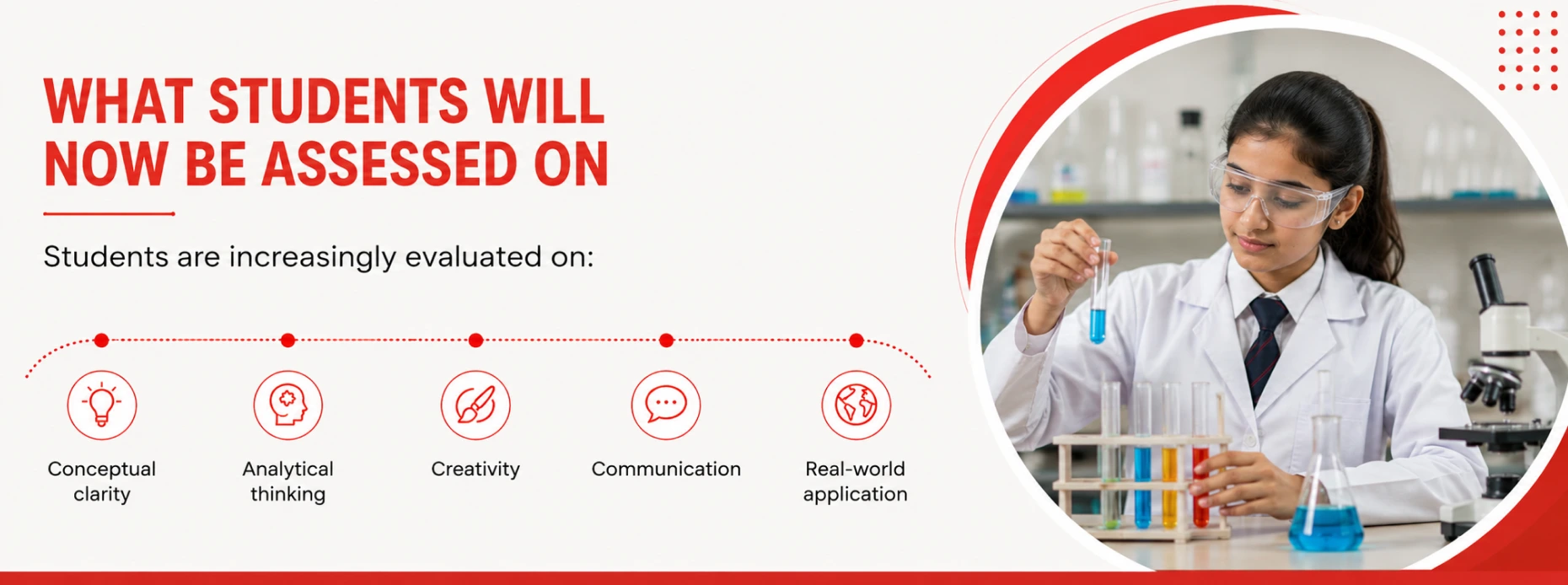
PARAKH aims to change this approach by encouraging schools and educational boards like CBSE to assess students based on:
- Conceptual clarity
- Analytical thinking
- Creativity
- Communication skills
- Practical application of knowledge
- Holistic development
This marks an important transition in Indian education because future careers and industries increasingly require students who can think independently, solve problems, collaborate effectively, and adapt to changing environments.
Why is the CBSE Framework Changing?
The world around us has evolved dramatically over the last decade. Technology, artificial intelligence, automation, and digital transformation are changing the nature of jobs and industries. As a result, education systems worldwide are also evolving.
The earlier examination-focused approach often created:
- High academic pressure
- Excessive dependence on memorisation
- Limited creative exploration
- Fear of failure among students
- Lack of real-world skill development
The new CBSE framework, guided by NEP 2020 and PARAKH, seeks to create a healthier and more balanced learning environment where students are encouraged to understand concepts deeply rather than simply prepare for exams.
The focus is gradually shifting from:
- “How much can a student memorise?”
to - “How well can a student understand, analyse, and apply knowledge?”
This shift is extremely important because future success will depend less on memorised information and more on problem-solving ability, innovation, adaptability, and communication.
How PARAKH is Changing CBSE Assessments
One of the biggest changes students and parents will notice is the transformation in assessment patterns.
CBSE has already started introducing competency-based questions in board examinations. These questions are designed to evaluate whether students truly understand concepts and can apply them to practical situations.
Instead of asking direct theoretical questions, assessments are now including:
- Case studies
- Real-world scenarios
- Application-based problems
- Critical reasoning questions
- Analytical thinking exercises
For example, earlier science exams might have asked students to simply define a concept. Under the new framework, students may instead be asked to explain how that concept works in everyday life or solve a situation-based problem using their understanding.
This encourages students to think independently rather than rely solely on memorised textbook responses.
Reduced Focus on Rote Learning
One of the most significant goals of PARAKH is reducing the overdependence on rote learning.
For years, many students associated studying with memorising chapters repeatedly before examinations. However, memorisation alone does not always build long-term understanding or confidence.
The new framework encourages:
- Concept-based learning
- Interactive classroom discussions
- Inquiry-driven teaching
- Practical learning experiences
- Cross-disciplinary thinking
Students are now expected to understand “why” and “how,” not just “what.”
This approach improves:
- Long-term retention
- Curiosity
- Confidence in applying knowledge
- Independent thinking abilities
Greater Importance of Holistic Development
Education is no longer viewed as purely academic. Schools are now encouraged to nurture:
- Emotional intelligence
- Creativity
- Leadership
- Collaboration
- Physical well-being
- Communication skills
- Ethical values
This means students are encouraged to participate actively in:
- Sports
- Performing arts
- Public speaking
- Innovation projects
- Community activities
- Leadership opportunities
Holistic education helps children become more balanced, confident, and resilient individuals.
Experiential Learning is Becoming Central
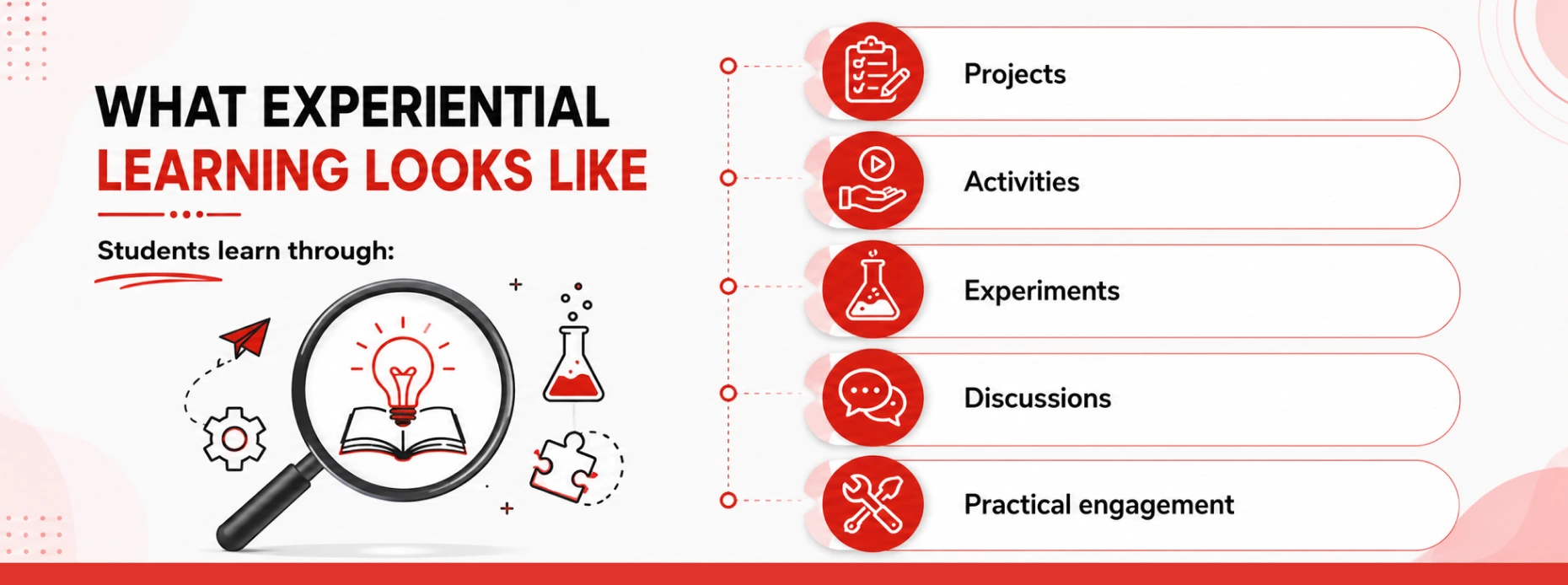
Experiential learning means students learn through:
- Activities
- Experiments
- Discussions
- Projects
- Research
- Observation
- Practical engagement
This approach develops:
- Curiosity
- Creativity
- Confidence
- Real-world understanding
- Collaborative skills
How Will Board Exams Change?
Board exams will continue to remain important, but their structure is evolving.
CBSE is gradually increasing the weightage of competency-based questions and reducing the dominance of direct memory-based questions.
Future assessments are expected to include:
- More application-oriented questions
- Integrated subject understanding
- Real-world case studies
- Analytical writing
- Skill-based evaluations
This change is intended to reduce unhealthy exam pressure while making assessments more meaningful and balanced.
Students who understand concepts deeply and practice critical thinking will be better prepared for these evolving examination patterns.
What Skills Will Students Need in the Future?
Under the new CBSE framework, students benefit most when they develop a broad range of life skills alongside academics.
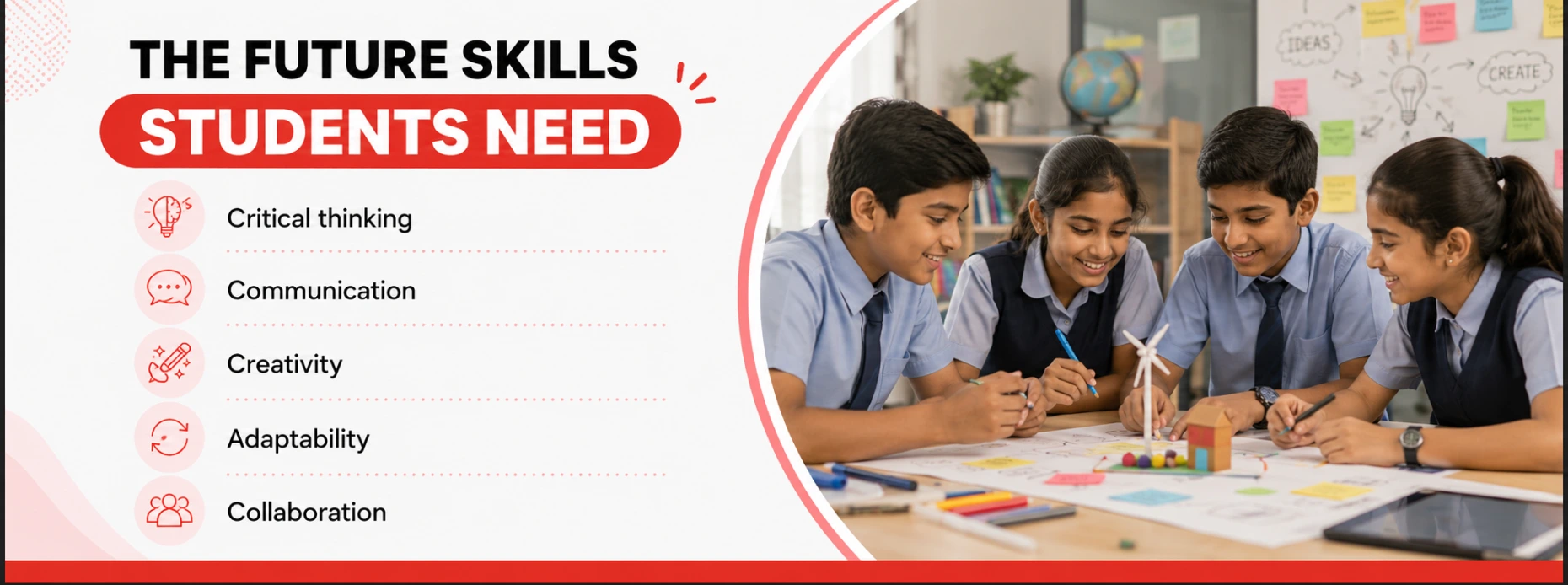
Some of the most important skills include:
Critical Thinking
Students must learn to analyse information, evaluate ideas, and solve problems logically.
Communication Skills
Creativity and Innovation
Modern careers reward original thinking and innovative problem-solving abilities.
Adaptability
Students must become flexible learners who can adapt to rapidly changing environments and technologies.
Collaboration
Teamwork and interpersonal skills are essential in modern workplaces and global environments.
These skills are now becoming an integral part of school education itself.
How Parents Can Support Children During This Transition
Instead of focusing only on marks, parents can encourage:
- Curiosity
- Discussions
- Independent thinking
- Reading habits
- Creativity
- Problem-solving
It is also important to reduce excessive academic pressure and recognise that learning is a long-term developmental journey.
Parents should encourage children to:
- Ask questions
- Explore ideas
- Participate in extracurricular activities
- Develop communication confidence
- Learn from mistakes without fear
A supportive environment at home significantly strengthens a child’s confidence and love for learning.
How Dhruv Global School Aligns with the New Educational Vision
We focus on:
- Conceptual understanding
- Student-centered learning
- Experiential education
- Skill development
- Leadership building
- Holistic growth
Our classrooms encourage students to think independently, participate actively, and develop confidence in expressing their ideas.
We believe education must prepare students not just for examinations, but for real-world challenges, future careers, and responsible global citizenship.
As Indian education continues to evolve, schools must create learning environments that balance academic excellence with emotional, social, and creative development.
Final Thoughts
PARAKH represents a major step forward in transforming Indian education into a more student-centric, future-ready system.
The new CBSE framework is helping shift education away from memorisation and towards:
- Understanding
- Creativity
- Skill development
- Practical application
- Holistic growth