You have watched your child walk confidently into their primary school classroom for years. They know the teachers. They know the routines. They know exactly where to sit at lunch and which corridor leads where. They belong there, and it shows.
Then comes the letter. Next year, middle school.
For many children, and many parents, that announcement lands with a weight that surprises them. Because the move from primary to middle school is not just a change of building. It is a change of everything, the social landscape, the academic demands, the daily structure, the expectations, and in many ways, the version of themselves your child has been for the last five or six years.
Some children sail through it. Others struggle in ways that are not always visible from the outside. Most fall somewhere in between managing on the surface, feeling more uncertain underneath than they are letting on.
This blog is for every parent in that waiting period. The months between finding out and finding out how it actually goes. Here is what the transition really involves, what your child needs from you during it, and what makes the difference between a child who finds their footing quickly and one who takes much longer.
Why the Transition to Middle School Feels So Big
It helps to be specific about what the transition involves, because it is easy to underestimate it.
In primary school, most children have one or two core teachers. These are adults who know them well, notice when something is off, and have the time and relationship to respond. The classroom is a contained, familiar community. The academic work, while demanding, follows patterns the child knows. There is a predictability to the day that provides a quiet but significant sense of safety.
Middle school removes most of that in one go.
Suddenly there are six, eight, ten different teachers. Each has their own expectations, their own style, their own tolerance for lateness or noise or questions. There are different rooms for different subjects, different homework systems, different classmates in different periods. The day is faster, more fragmented, and far less forgiving of a child who loses track.
Academically, the jump is real. Middle school introduces subjects with a depth and pace that primary school rarely prepares children for. The expectation shifts from being guided through learning to managing learning independently and that shift is rarely explained explicitly to children. They are simply expected to do it.
Socially, it is perhaps the most turbulent time. Friendships from primary school fracture under new social pressures. New hierarchies form. Questions about identity, who am I, where do I belong, what kind of person do I want to be, arrive with an urgency that can feel overwhelming, even to children who could not articulate what they are feeling.
None of this is cause for alarm. All of it is cause for being informed and present.
What Your Child Is Not Telling You
One of the most important things to understand about the primary to middle school transition is that children, particularly children who have always done well, often do not ask for help when they need it most.
A child who has been confident and capable in primary school arrives in middle school expecting to feel the same way. When they do not when they feel lost, left out, behind, or anxious, they frequently interpret it as a personal failure rather than a predictable response to a genuinely big change. They do not come home and say: I am struggling. They come home and say nothing, or fine, or I’m tired.
What looks like attitude is often anxiety, what looks like laziness is often overwhelming, what looks like indifference to school is often a child who cares so much and feels so uncertain that disengaging feels safer than trying and failing.
This matters because the response that actually helps is very different from the response that the surface behaviour invites. A child who shrugs and disappears to their room does not need distance. They need connection, offered without pressure, consistently and without an agenda.
How to Prepare Your Child Before Starting Middle School
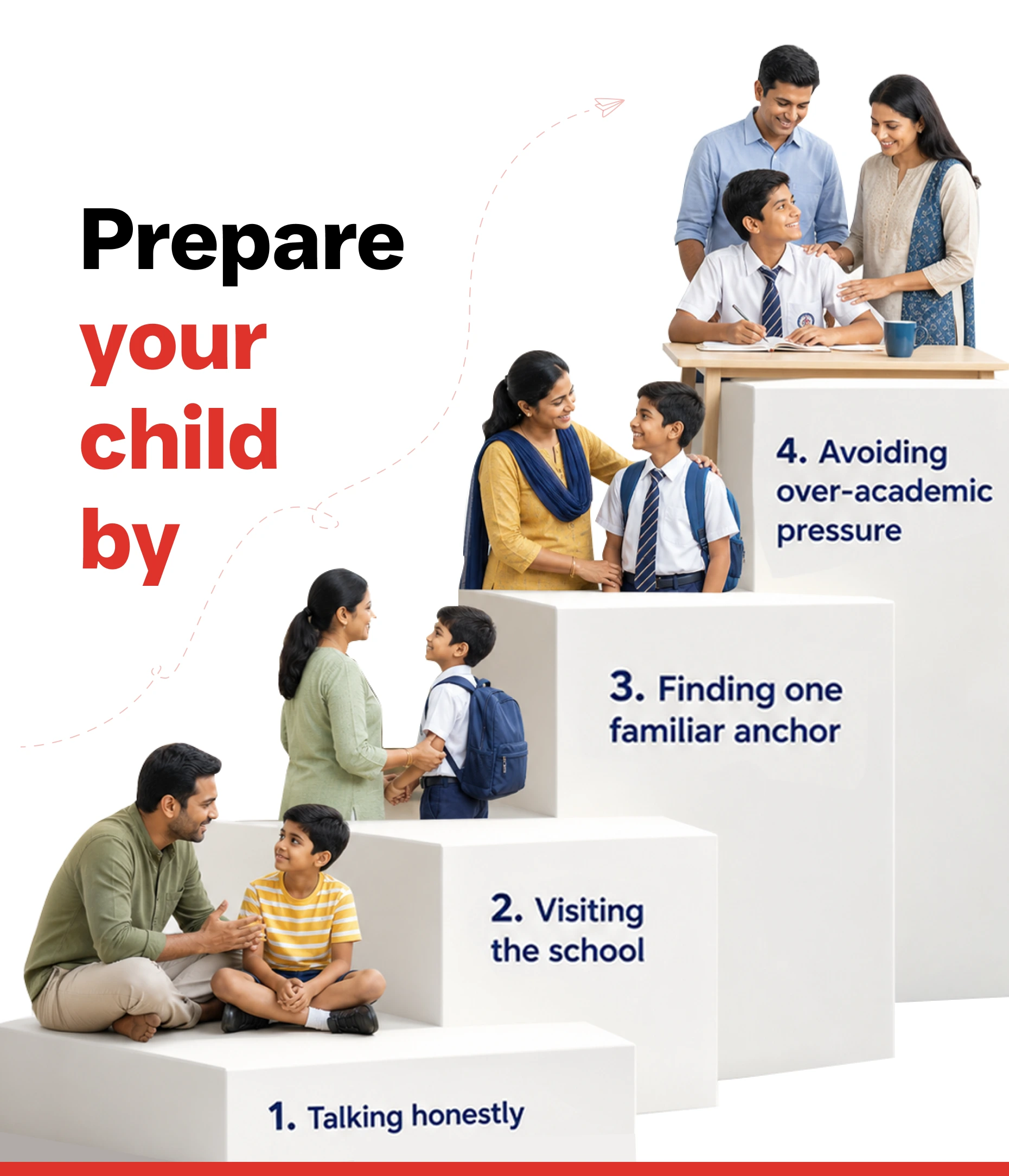
The transition does not begin on the first day of middle school. It begins the moment your child knows it is coming. How you handle those months shapes how they arrive.
Talk about it honestly, without performing calm you do not feel. Children sense inauthenticity immediately. If you are anxious about the move, acknowledge it and then model how you manage anxiety. I know this feels like a big change. I had those feelings too. Here is what helped me. That is far more useful than pretending there is nothing to feel.
Visit the school before term begins. Familiarity is one of the most effective anxiety-reducers available to a young brain. A child who has walked the corridors, found the canteen, and sat in the classroom before the first day has a cognitive map. The unknown has become known. That matters more than it sounds.
Find one point of continuity. A friend from primary school joining the same middle school. A sport they already play that has a middle school team. A subject they love that continues. One thread of continuity through the transition gives a child something to hold onto when everything else is unfamiliar.
Resist the urge to over-prepare academically. Many parents respond to the transition by loading children with extra tuition and preparatory study over the summer. For most children, this sends exactly the wrong message, that middle school is something to be feared and fought. What children need in the summer before middle school is rest, play, and the quiet rebuilding of confidence. Trust that they are ready. Because they are.
The First Few Weeks: How to Support Your Child Effectively
Keep home as stable as possible: When everything outside is changing, home needs to be the thing that does not. Consistent mealtimes, consistent sleep routines, consistent rituals, these are not trivial. They regulate the nervous system. A child who is well-rested and eating properly has significantly more emotional resources available for the challenges of the school day.
Ask better questions: How was school? produces fine. Try something more specific and lower-stakes: What was one thing that surprised you today? or Was there a moment today where you felt like you knew what you were doing? or simply What did you eat for lunch? Start from the concrete and let the conversation find its own way to the things that matter.
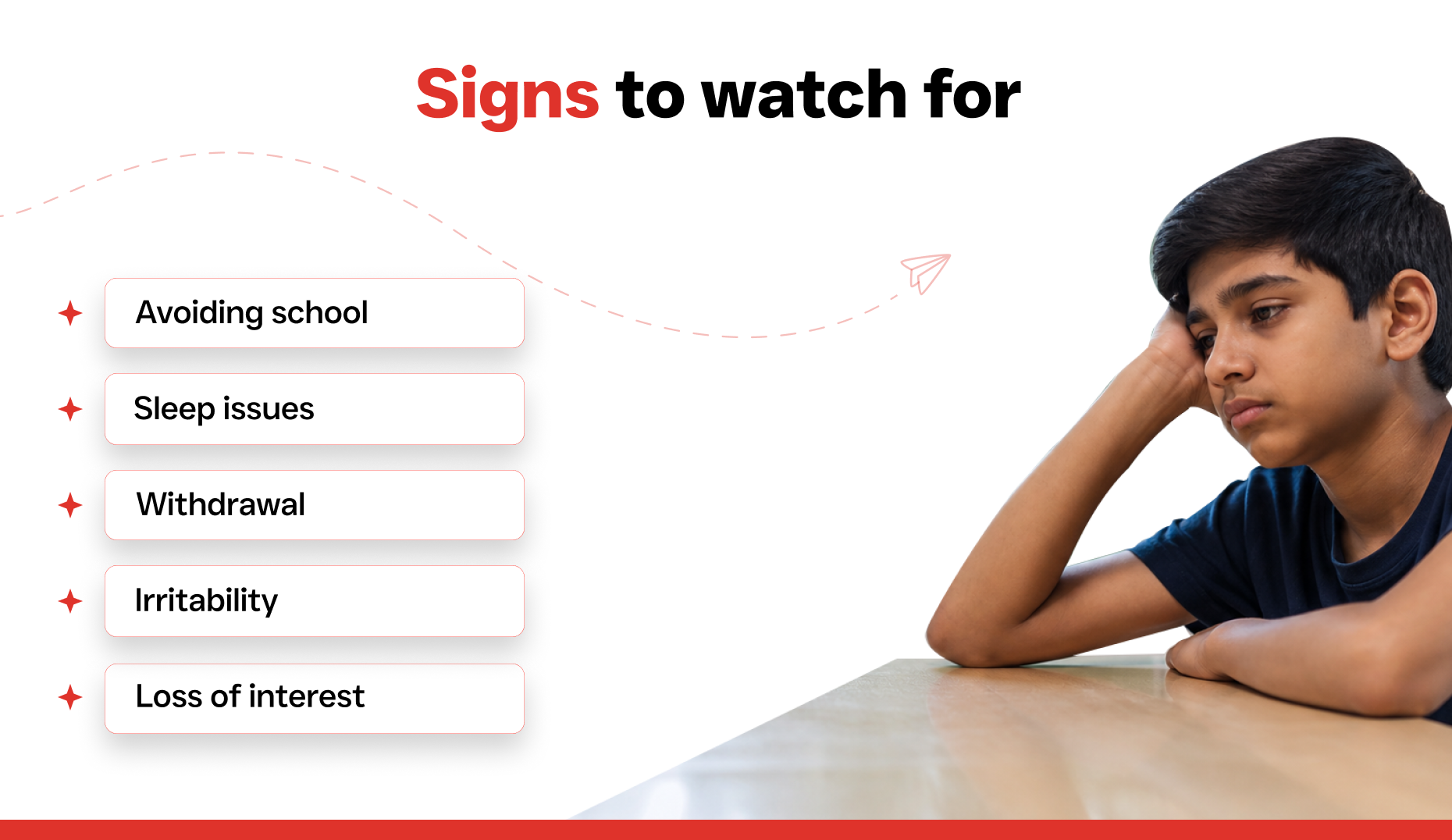
Watch for the signs: Persistent stomach aches or headaches on school mornings. Noticeable withdrawal from things they previously enjoyed. Significant sleep disruption. Heightened irritability that does not lift. A pattern of not wanting to talk about school at all. Any one of these in isolation may be nothing. A cluster of them, sustained over more than two or three weeks, is worth a gentle, direct conversation and potentially a conversation with the school.
Do not make academic performance the main conversation: In the first term of middle school, grades matter far less than adjustment. A child who is socially settled, emotionally regulated, and developing confidence in the new environment will find their academic feet. A child who is anxious, isolated, or burned out will not, regardless of how much they are pushed.
Helping Your Child Adjust Socially in Middle School
Friendships in middle school are one of the hardest parts of the transition to support from the outside, because they are largely out of your hands. But they are not entirely.
You can create the conditions for friendships to form. Saying yes to after-school activities. Being willing to host. Encouraging your child to join one club, one team, one group that has nothing to do with their primary school identity, a place where they can be new, without the weight of who they have always been.
You can also normalise the messiness of it. Middle school friendships are not the easy, unconditional bonds of primary school. They are more complicated, more fragile, and more revealing of who your child is becoming. Some primary school friendships will not survive the transition, and that loss is real and worth acknowledging, not minimising.
The children who navigate middle school social life most successfully are usually the ones who have been told, clearly and repeatedly, that they do not need to be popular — they need to be kind, and to find the people who are kind back. That is a simpler and more honest guide than most children receive.
How Dhruv Global School Supports the Transition
At Dhruv Global School, we know that how a child enters middle school shapes their entire experience of it. The settling-in period is not a formality we rush through. It is a priority we plan for.
In the weeks before and after the transition, our pastoral team works proactively with every incoming student. Not waiting for problems to surface, but building the relationships and the environment that prevent many of them from taking hold in the first place.
Our middle school teachers are trained to understand the developmental reality of the children in front of them. A child who is quiet in class in October may not be disengaged. They may be finding their footing. A child who seems distracted may be carrying something. Our teachers notice. They follow up. They tell us.
We also keep parents informed and involved, not in a way that removes children’s growing need for independence, but in a way that means you are never genuinely in the dark about how your child is doing. Because the partnership between school and family matters at every stage of education. It matters most at the transitions.
A Final Word
The transition from primary to middle school will pass. It feels significant because it is significant, but it is also survivable, and for most children, it eventually becomes something more than that. It becomes the place where they grew up a little. Where they discovered they were more capable than they thought. Where they found the friends who actually fit.
Your job during this time is not to make it easy. You cannot. Your job is to make sure your child knows that whatever happens on the other side of that school gate, they have someone in their corner who is steady, honest, and not going anywhere.
That, more than any preparation strategy or academic plan, is what carries a child through.