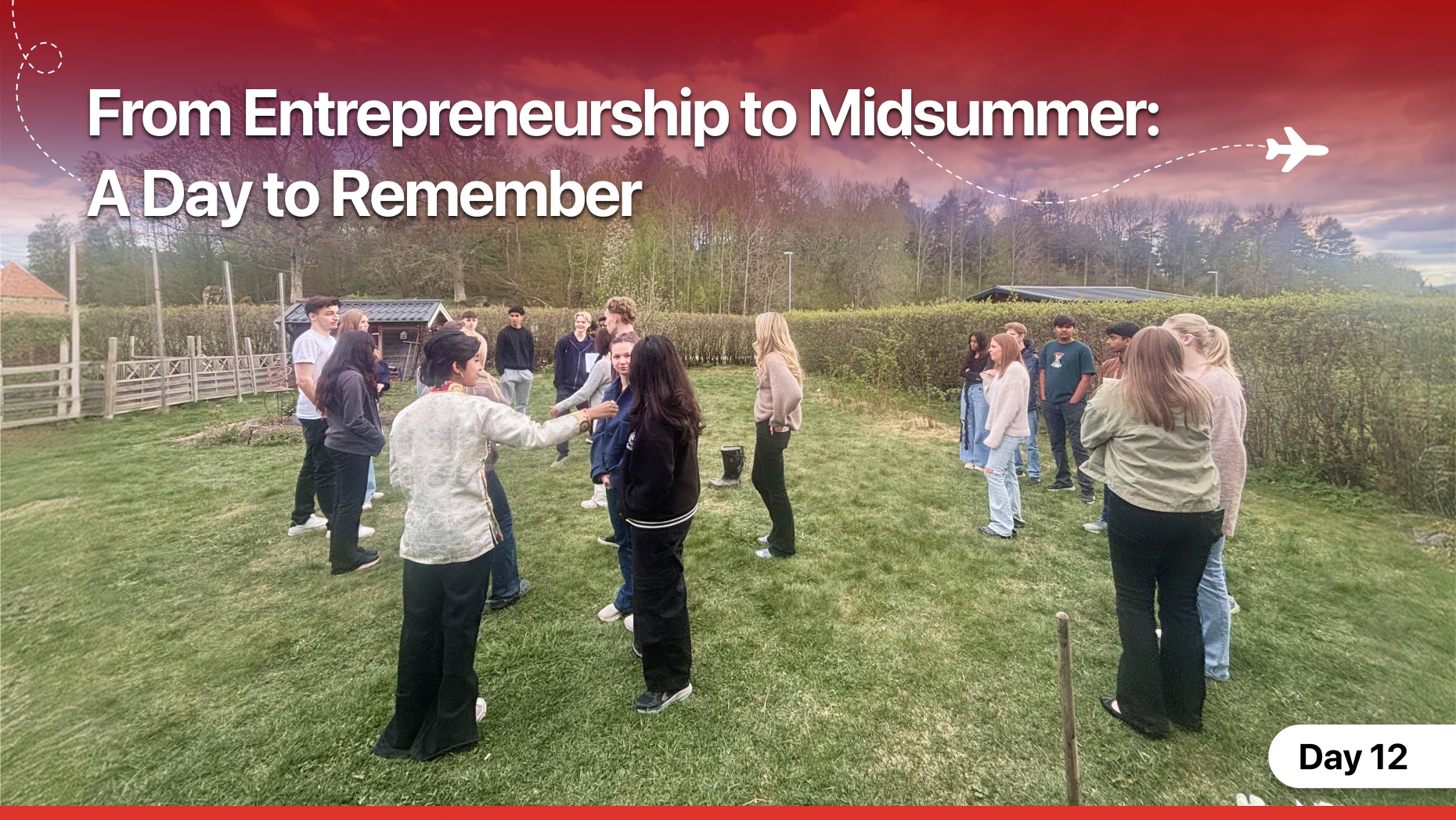
There is a particular kind of learning that no classroom can replicate. Not because classrooms are inadequate, they are essential. But because some things only happen when a child is removed from everything familiar, placed somewhere genuinely new, and asked to navigate it.
A new country. A different school. A host family whose routines, language, and assumptions about the world are nothing like their own. Meals that taste different. Conversations that require effort. Moments of complete disorientation followed, eventually, by moments of genuine connection.
This is what an exchange programme actually involves. And what it produces, in confidence, perspective, the specific kind of resilience that only comes from managing yourself somewhere nobody knows you, is something that stays with a young person for the rest of their life.
What Is a Student Exchange Programme?
The term covers a range of experiences, and it is worth being specific. A school exchange programme typically involves a student spending a defined period, two weeks, a term, or a full academic year, at a partner school in another country, often living with a host family. In many programmes, students from the partner school visit in return, which means the exchange is reciprocal and the learning runs in both directions.
Shorter cultural exchange visits, where a group of students travels together with teachers for a week or two, are related but distinct. They are genuinely valuable. They are also more comfortable, more supervised, and less transformative than a genuine exchange where the student is largely operating independently in a new environment.
The full exchange, particularly one where a student lives with a family rather than in a school hostel, is the version that produces the most significant outcomes. It is also the version that most students approach with some combination of excitement and quiet terror. Both responses are appropriate. Both are part of what makes it work.
Why Exchange Programmes Are About More Than Travel
The first thing that happens when a student arrives somewhere genuinely unfamiliar is a period of managed disorientation.
Everything that was automatic at home, navigating the school, understanding social cues, knowing how to ask for things, reading the mood of a room, requires conscious effort. The mental energy that was previously available for learning and socialising is temporarily consumed by the basic work of figuring out how things work here.
This is uncomfortable. It is also one of the most cognitively productive experiences available to a developing brain.
Neuroscience research on neuroplasticity consistently shows that novel environments, environments that demand new patterns of thinking and behaviour, accelerate the formation of neural connections. The brain that is comfortable is a brain that is not growing particularly fast. The brain that is operating in unfamiliar territory, making new associations, developing new strategies for navigation, that brain is developing at a rate that familiar environments simply do not produce.
The disorientation of the first week of an exchange programme is not a problem to be solved. It is the mechanism. And the student who comes out the other side of it has not just survived something hard. They have expanded, permanently, what they believe themselves capable of.
The Biggest Benefits of Student Exchange Programmes
Genuine Independence
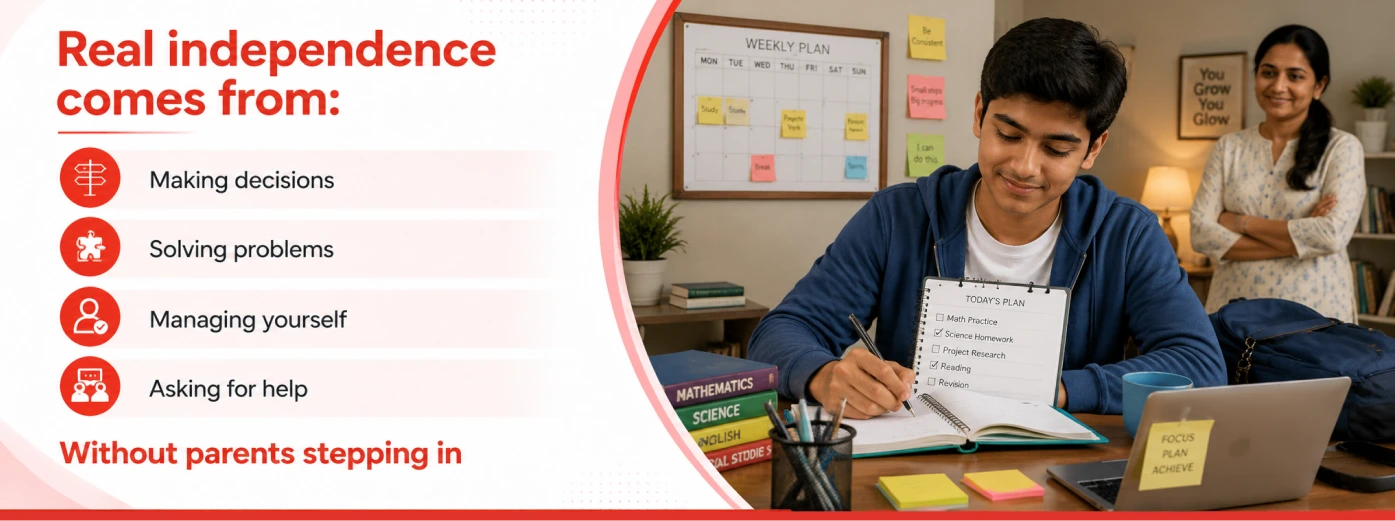
This is the most immediate and the most lasting outcome. A student who has managed themselves, their schedule, their relationships, their problems, their homesickness, in a context where their parents cannot step in has discovered something about themselves that no amount of reassurance from home can give them.
They know they can do it. Not because someone told them they could. Because they did it.
That knowledge, grounded in actual experience rather than encouragement, changes how a student approaches every subsequent challenge. The difficult project, the unfamiliar social situation, the setback that requires regrouping, these feel different to a student who has already navigated a month of being genuinely on their own.
Cross-Cultural Intelligence
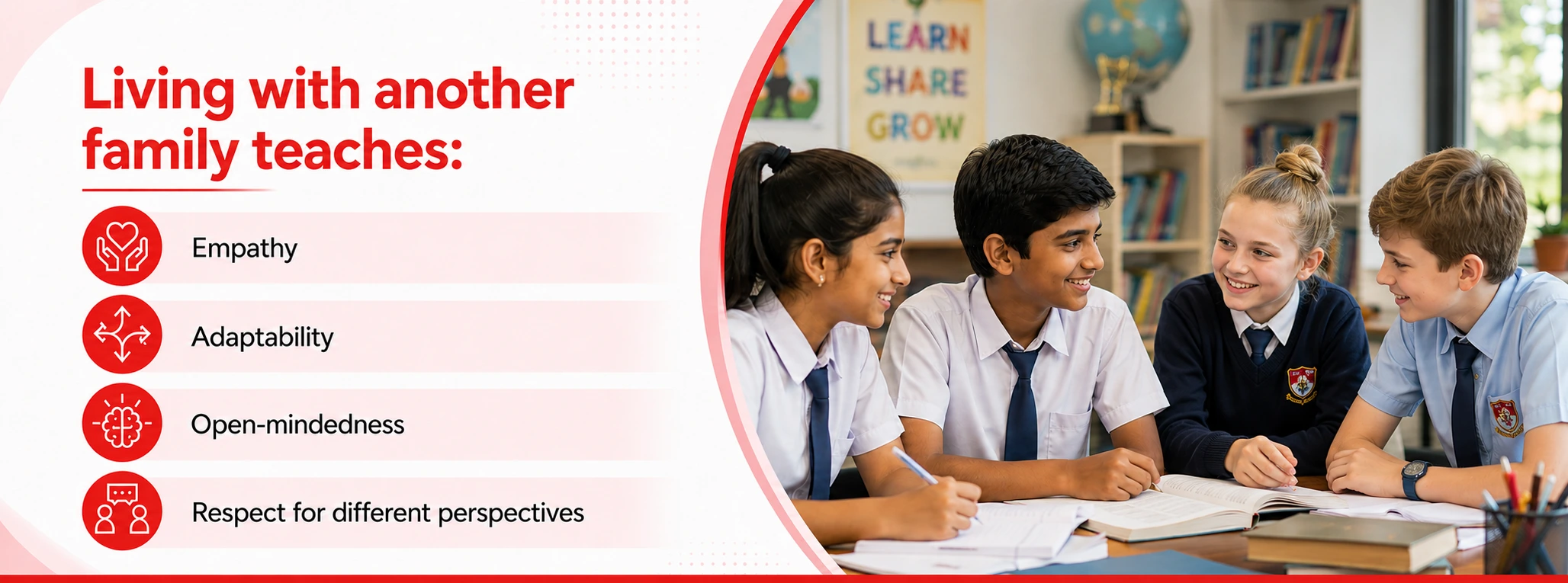
Living with a family from another culture is a masterclass in the skill that is becoming one of the most valued capabilities in every professional context: the ability to understand people whose frame of reference is fundamentally different from your own.
This is not learned by studying other cultures academically. It is learned by sitting at a different family’s dinner table every night, navigating humour that does not always translate, working out what is polite here versus what is polite at home, and gradually — imperfectly, messily, developing a more flexible and more generous model of how the world works.
Students who return from exchange programmes consistently report a shift in how they think about differences. Not a romanticised appreciation of other cultures, but a more practical and more honest understanding that there are genuinely multiple ways of doing things and that the way they grew up with is one of them rather than the default.
This shift in perspective is among the most consequential things a school-age experience can produce. It is the beginning of genuine global citizenship, not as a concept stated in a prospectus, but as a lived, practised capability.
Language Development
For students who travel to a country where their primary language is spoken alongside or secondary to another, the immersion effect on language acquisition is unmatched by any classroom-based programme.
Research on language learning consistently identifies immersive real-world exposure as the most effective accelerant of acquisition. A student who spends four weeks navigating daily life in a language they are developing, asking for directions, understanding jokes, following conversations at the dinner table, achieves more in that period than months of formal instruction can deliver.
Even for students who travel to countries where their primary language is the medium of instruction, the exposure to regional accents, idiomatic usage, and the speed of natural conversation in an authentic context builds communicative confidence that classroom English rarely produces.
Resilience and Emotional Regulation
Homesickness is real. Missing your family, your friends, your food, your routines, this is not a weakness. It is a normal human response to genuine loss, even temporary loss. And navigating it, choosing to stay present and engaged rather than withdrawing, finding small things to appreciate in each day, building new connections even when existing ones feel far away, is one of the most powerful emotional resilience exercises available to an adolescent.
The student who manages homesickness on an exchange and comes through it has practised something that will serve them at university, in their first job, in every new city or chapter of their life. They have learned that missing something is survivable. That discomfort is not permanent. That new belonging is possible even when the old one feels irreplaceable.
Academic Broadening
Common Concerns Parents Have About Student Exchange Programmes
The concerns that parents most commonly raise about exchange programmes are consistent and worth addressing directly.
Safety
Reputable exchange programmes have comprehensive safeguarding structures, vetted host families, regular check-ins with a programme coordinator, clear protocols for difficulty. The risk of something going wrong in a well-run programme is genuinely low. The risk of a child never developing the independence they need for adult life because every potential discomfort was avoided is considerably higher.
Academic disruption
Cost
Exchange programmes vary considerably in their financial requirements, and reciprocal exchanges, where a student from the partner school stays with your family in return, reduce the cost significantly. Many schools offer bursary support for families where cost is a barrier. The conversation is worth having explicitly with the school rather than assuming it is out of reach.
The child not wanting to go
Anticipatory reluctance is almost universal and almost never predictive of the actual experience. The students who report the most significant personal growth from exchange programmes are frequently those who were most reluctant to go. The resistance is usually fear of the unfamiliar. Once the unfamiliar becomes familiar and it does, far faster than most students expect, the reluctance disappears and something else takes its place.
How Dhruv Global School Approaches Exchange Opportunities
At Dhruv Global School, international exposure is not an optional extra for students whose families can afford it. It is part of how we think about what a complete education involves.
We design exchange and cultural exposure opportunities that are carefully matched to students’ developmental stage, age-appropriate in their demands, properly safeguarded in their structure, and genuinely ambitious in what they ask of students. We prepare students before they go and debrief them properly when they return, because the learning of an exchange is not only in the experience itself but in the reflection that makes sense of it.
We also prepare families. Because the parent who can hold their anxiety during the two weeks their child is away, who does not call three times a day, who trusts the process enough to let it work, is the parent whose child comes home having genuinely grown, rather than having been managed through an expensive holiday.
The exchange experience belongs to the student. The best thing a parent can do is let it.
Final Thoughts
The student who goes on exchange and the student who does not are not the same person by the end of secondary school. Not because one is smarter or more capable than the other. But because one of them has had an experience that the other has not, an experience of being somewhere completely new, managing themselves through it, and discovering that they are equal to it.
That discovery is not small. It is the kind of thing a person builds the rest of their life on.