Why do some students learn faster and do better than others, even when they study the same syllabus in the same classroom? The answer is not just intelligence. It mostly depends on how learning is taught and supported.
One of the most important ideas in education research that explains this difference is the 2 Sigma Learning System. This article explains what the 2 Sigma Learning System is, where it came from, how it works, and why it is one of the most effective ways to improve student performance. This approach is especially useful in modern schools that focus on student growth.
Benjamin Bloom’s Research Explained
The idea of the 2 Sigma Learning System comes from a major study by educational psychologist Benjamin Bloom. His research looked at how different teaching methods affect how well students learn.
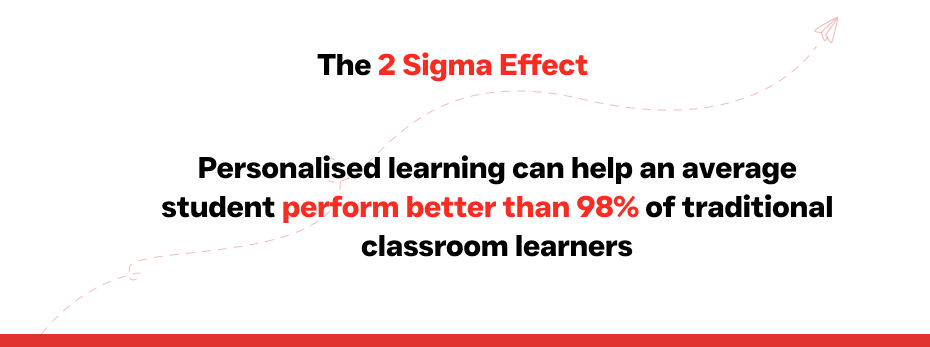
Bloom found that students who received one-to-one tutoring and learned through a mastery-based approach performed much better than students in traditional classrooms. The improvement was very large. These students performed two standard deviations, or 2 sigma, above the average classroom student.
In simple words, this means that an average student with personalized instruction performed better than about 98 percent of students in a regular classroom.
This discovery became known as the “2 Sigma Problem.” The main question was how schools could give all students the benefits of one-to-one tutoring without making education too costly or difficult to manage.
What Is the 2 Sigma Learning System?
The 2 Sigma Learning System is not one single teaching method. It is a learning framework based on three main ideas:
- Personalized instruction
- Mastery-based learning
- Continuous feedback and support
Instead of pushing all students to move at the same speed, this system focuses on making sure each student fully understands a topic before moving ahead. Learning gaps are noticed early and fixed right away.
Why Traditional Classroom Learning Often Falls Short
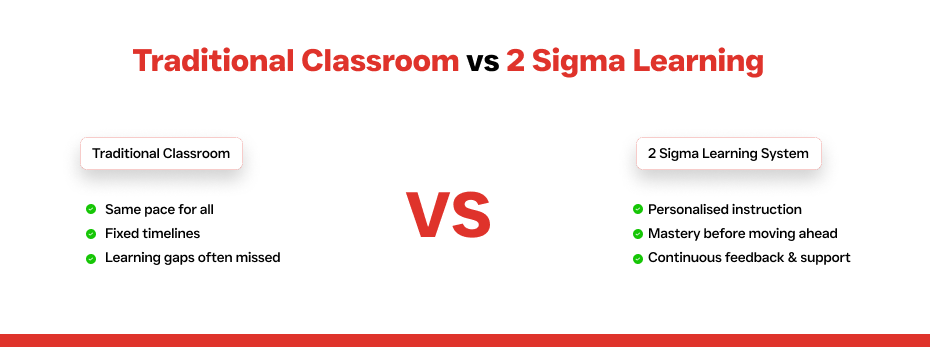
In a typical classroom:
- One teacher teaches many students at the same time
- Lessons follow a fixed timetable
- Some students fall behind without anyone noticing
- Other students move ahead without enough challenge
This system helps schools cover the syllabus on time. However, it does not always make sure that every student understands the material well. When students miss basic ideas, they often struggle later. This can cause stress, low confidence, and uneven results.
The 2 Sigma approach solves these problems by changing the focus. Instead of just teaching lessons, it focuses on making sure learning actually happens.
What are the Core Components of the 2 Sigma Learning System
Personalized Learning Paths
Personalization is the core of the 2 Sigma system. Each student’s strengths, needs, and learning gaps are found through regular checks and careful observation.
Instead of giving the same explanation to the whole class again and again, teachers adjust their teaching based on student needs. This can include extra support, more practice, or advanced tasks for students who are ready.
Mastery-Based Progression
In mastery-based learning, students do not move forward just because a chapter is finished. They move ahead only after they clearly understand the topic.
This approach:
- Reduces learning gaps over time
- Builds strong basic knowledge
- Increases confidence and motivation
Students learn that making mistakes is part of learning, not a sign of failure.
Continuous Feedback and Mentoring
Regular feedback is very important in the 2 Sigma system. Students do not wait until final exams to know how they are doing. They receive feedback often.
Teachers act more like mentors than lecturers. They guide students, help them overcome problems, and teach better learning habits. This creates a safe learning space where students feel comfortable asking questions.
How the 2 Sigma Learning System Improves Academic Performance
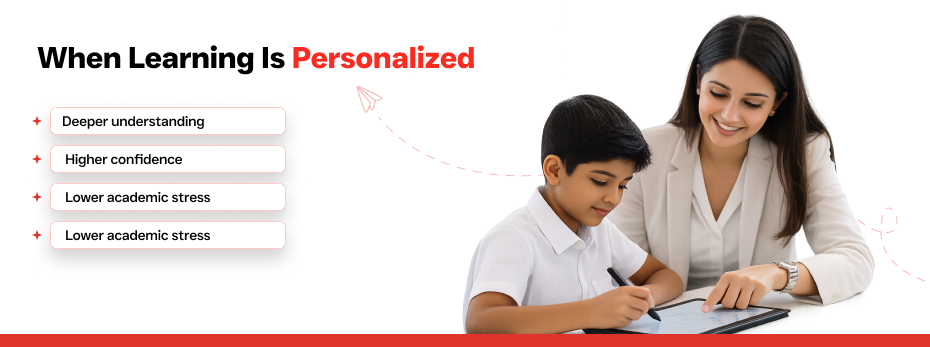
Deeper Understanding of Concepts
Higher Student Engagement
Reduced Academic Stress
Improved Confidence and Self-Belief
The 2 Sigma Learning System in Modern Schools
Even though full one-to-one tutoring is not always possible, many schools use 2 Sigma ideas through:
- Small group teaching
- Different teaching methods for different learners
- Mentoring programs
- Technology-based personalized learning
- Regular low-pressure assessments
These methods help schools move closer to personalized learning while keeping classrooms practical.
Role of Teachers in the 2 Sigma Model
Teachers play a key role in the 2 Sigma approach. Their role goes beyond teaching lessons. They also become:
- Learning guides
- Mentors
- Observers of student progress
This change helps build stronger relationships between teachers and students. It also creates a classroom that responds better to individual needs.
How the 2 Sigma Learning System Matches Modern Education Trends
In 2026, education focuses more on:
- Learning skills
- Student well-being
- Real-world abilities
- Individual learning journeys
The 2 Sigma Learning System fits well with these goals. It focuses on mastery, personalization, and steady improvement instead of rushing through the syllabus.
How Dhruv Global School Applies 2 Sigma Principles
At Dhruv Global School, learning is planned around student progress rather than fixed timelines. The school focuses on clear understanding, personal attention, mentoring, and inclusive support.
With guided teaching, regular support, and a caring environment, students learn at a pace that suits them. This helps them build strong foundations and lasting confidence.
Long-Term Benefits Beyond Academics
The benefits of the 2 Sigma Learning System go beyond marks:
- Students learn self-discipline and responsibility
- Learning becomes enjoyable and meaningful
- Confidence to face new challenges grows
- Independent learning skills improve
These skills prepare students for exams and for learning throughout life.
Challenges in Using the 2 Sigma System
Although effective, the system needs:
- Well-trained teachers
- Smaller groups or smart classroom planning
- Strong systems for feedback and assessment
Schools that invest in these areas are more likely to see steady and lasting improvement.
Final Thoughts
The 2 Sigma Learning System shows that how students learn is just as important as what they learn. By focusing on personalization, mastery, and guidance, it supports real learning and builds confident students.
In a world where education must meet different learning needs, the 2 Sigma Learning System offers a proven way to help every student succeed, not just a few.