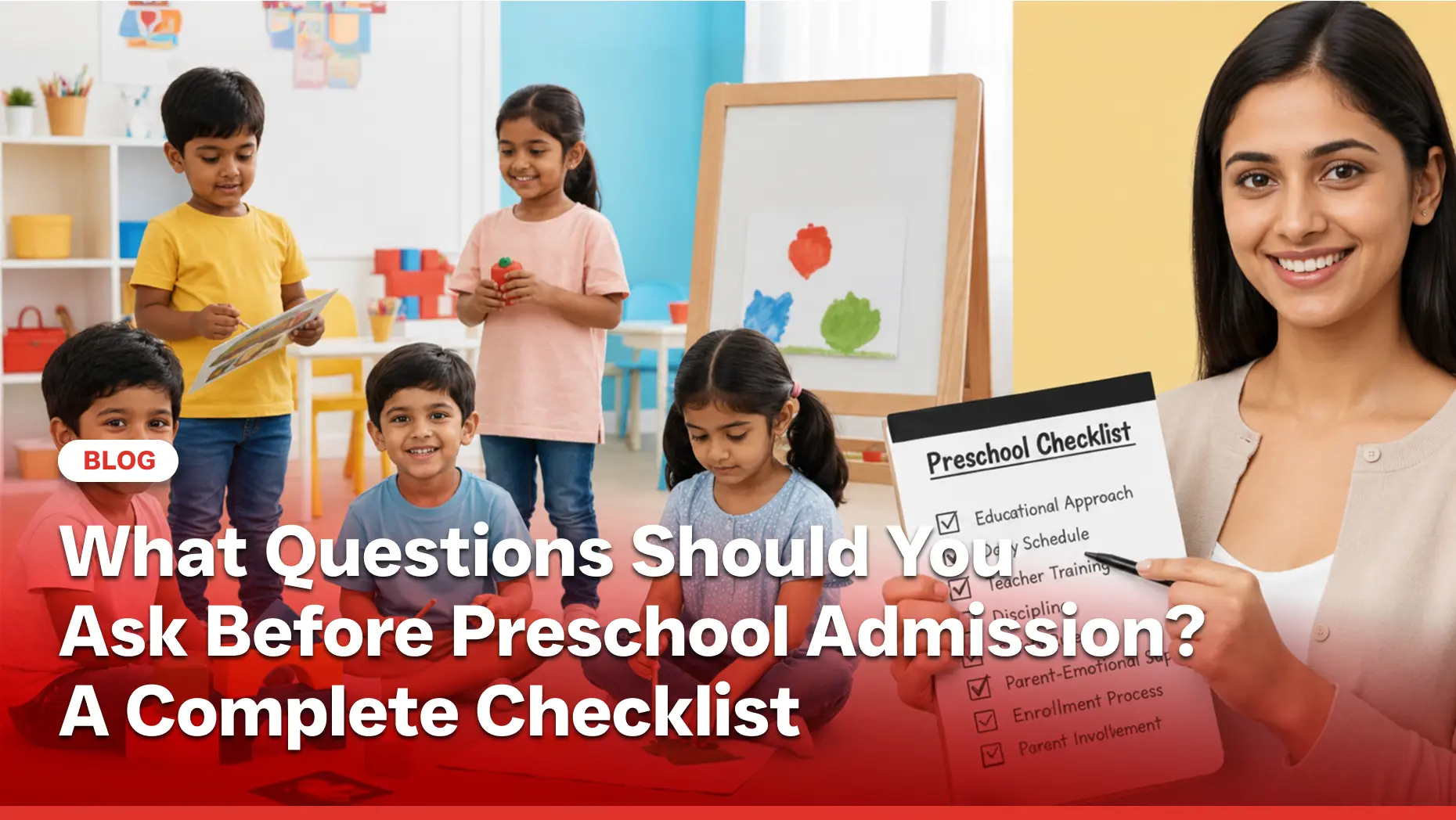
Choosing a preschool is often a parent’s first major education decision and it can feel surprisingly high-stakes for a child who is only two or three years old. Glossy brochures, polished campus tours, and long waitlists can make every preschool look reassuringly similar from the outside. The real differences only show up when you ask the right questions.
This blog walks through the questions that matter most, organised by what they actually reveal, so you can walk into an admission conversation with a clear sense of what to ask, and what the answers should tell you.
Why the Right Questions Matter More Than the Right Answers
Questions About the Preschool's Daily Routine
A preschool’s daily routine tells you more about the actual experience your child will have than almost anything else on a tour.
Ask About the Day-to-Day
- What does a typical day look like, hour by hour?
- How much of the day is free, child-led play versus structured activity?
- How are transitions between activities handled, is there a consistent routine my child can rely on?
- What happens if my child is tired, upset, or simply not in the mood for an activity?
- How much outdoor or physical play is built into the schedule daily?
A predictable daily routine is one of the most important sources of security for a young child. Schools that can describe their day in specific detail, not just “structured learning through play”, tend to be schools where that structure is genuinely lived, not just written in a brochure.
Questions About Teachers and Student–Teacher Ratios
The relationship between a young child and their teacher is, in many ways, the single most important factor in how well a child settles and learns in preschool.
Ask About the Adults in the Room
- What is the actual student-to-teacher ratio in my child's specific classroom, not just the school average?
- How long have the lead teachers been with the school?
- What training do teachers receive in early childhood development specifically?
- Will my child have the same primary teacher and classroom consistently, or does staffing rotate?
- How does the school handle staff turnover during the school year?
A low student-teacher ratio matters enormously at this age, but so does consistency. A young child who forms a bond with a teacher who then leaves mid-year can experience real distress. Ask specifically about staff retention, not just ratios.
Questions About Settling In and Separation Anxiety
Questions About the Curriculum and Learning Philosophy
Ask About How Children Actually Learn There
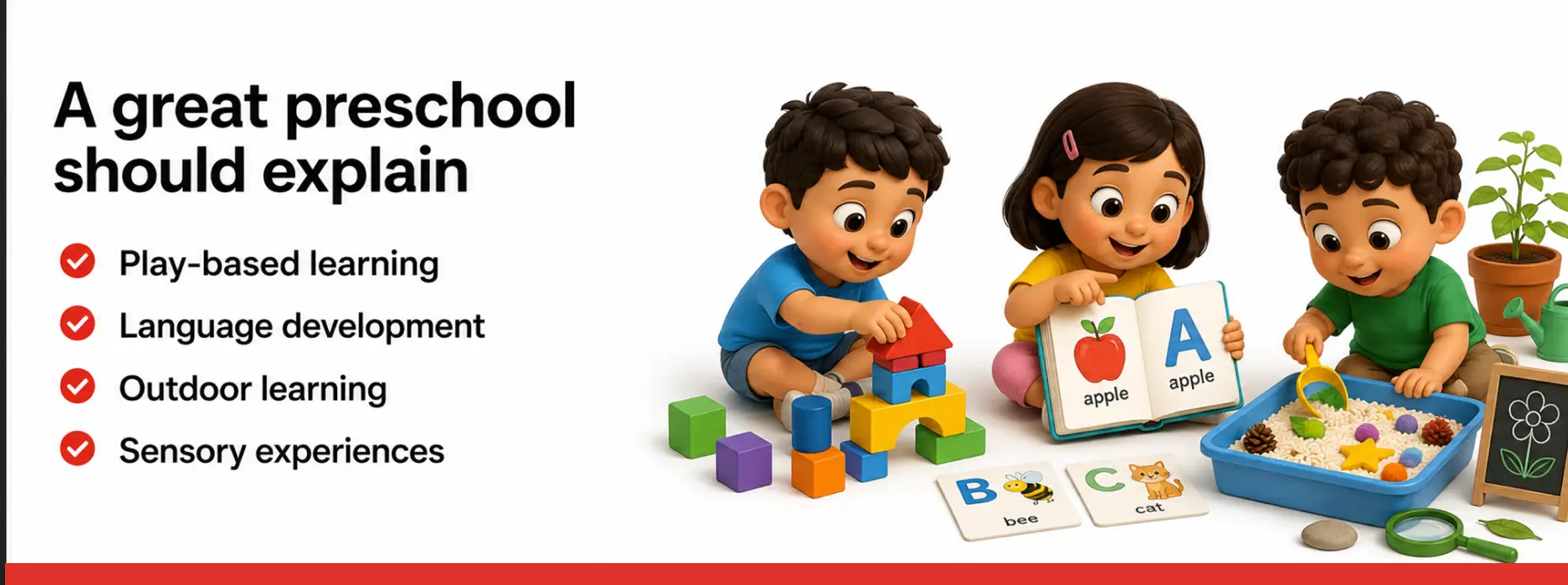
- What does play-based learning actually look like in a typical week?
- How does the school support early language development?
- How does the school approach children who learn or develop at a different pace than their peers?
- What role does outdoor and sensory play have in the curriculum?
- How much screen time, if any, is used during the school day?
Be cautious of preschools that emphasise early academic drilling, reading, writing, and structured worksheets, as a primary selling point. At this age, rich play-based learning consistently outperforms early formal instruction in supporting long-term development.
Questions About Safety, Health, and Communication
Ask About Safety and Everyday Communication
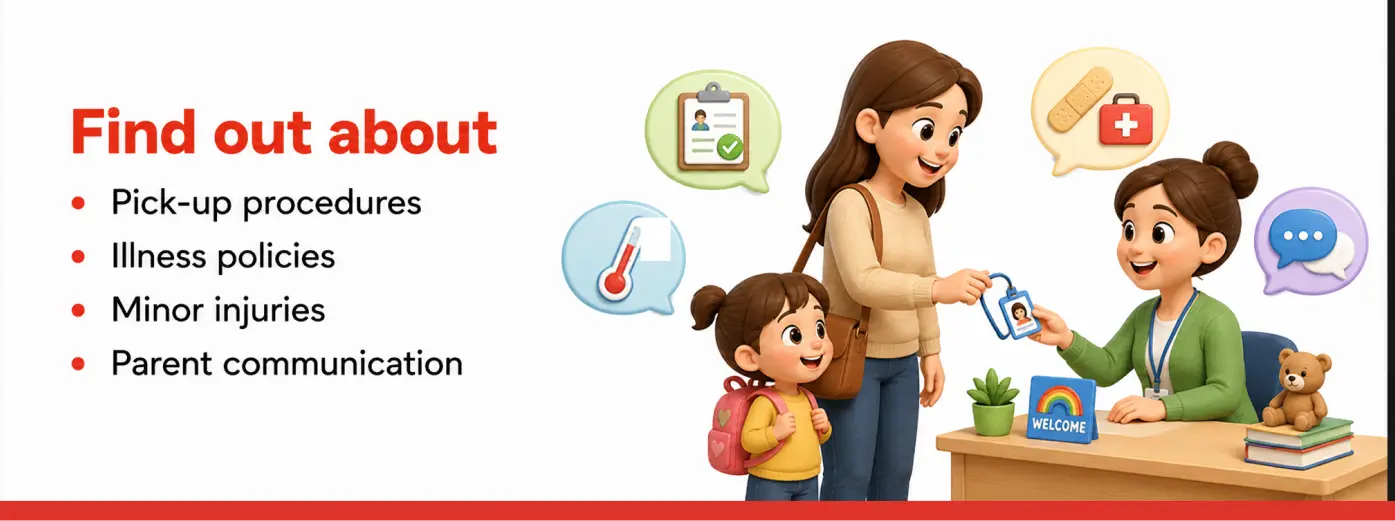
- What is the school's policy on illness, allergies, and medication during the day?
- How does the school handle minor injuries or incidents, and how are parents informed?
- What security measures are in place for pick-up and drop-off?
- How does the school communicate day-to-day updates, an app, a diary, verbal handover?
- What is the process if I need to raise a concern, and how quickly can I expect a response?
Clear, specific answers here matter more than they might seem to on a first visit. Everyday communication between school and parent is what you will actually experience for the next one to two years, far more often than any special event or facility.
Questions to Ask Yourself After Visiting a Preschool
A Quick Gut-Check
- Did the children I saw look relaxed and engaged, or hurried and anxious?
- Did teachers seem to genuinely enjoy being with the children, beyond simply supervising them?
- Did I feel comfortable, or did something feel rehearsed or evasive?
- Were my specific questions answered directly, or redirected to general marketing points?
How Dhruv Preschool Supports Parents During Admissions
At Dhruv Preschool, we encourage every one of these questions, because we believe an informed parent makes a far better partner in their child’s early years than one who is simply reassured.
Our classrooms run on a consistent, predictable daily routine built around play-based learning, with generous time for unstructured, hands-on activity alongside guided early language and social development. Class sizes are kept deliberately small across our branches, so that teachers can genuinely know each child, not just supervise them.
During the settling-in period, our teachers are positioned at the entrance to greet every child by name, and parents receive honest, specific updates about how their child is actually doing, not generic reassurance. We welcome parents to visit a classroom in session, speak directly with teachers, and ask exactly the kind of questions outlined in this blog before making a decision.
Final Thoughts
A preschool decision does not need to be perfect, it needs to be informed. Asking specific, pointed questions, and paying close attention to how confidently and honestly they are answered, will tell you far more than any brochure or ranking ever could.
If a school welcomes hard questions and answers them with specific detail, that is often the clearest signal of all.