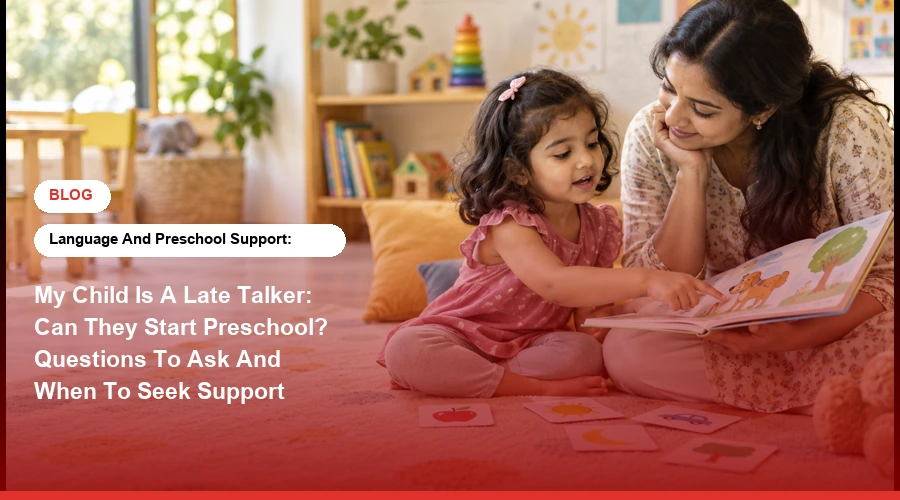
You are at a preschool visit in Pune. Other children are chatting during play. Your child is watching carefully, holding your hand, pointing at a toy or using a few familiar words. You may be wondering whether they are ready.
Then comes the question many parents quietly search late at night: “My child is a late talker. Can they start preschool?”
Here is the reassuring answer: a child does not need perfect speech or a large vocabulary to begin preschool. What matters is whether the setting understands their communication, supports their confidence and works with the family when extra help is needed.
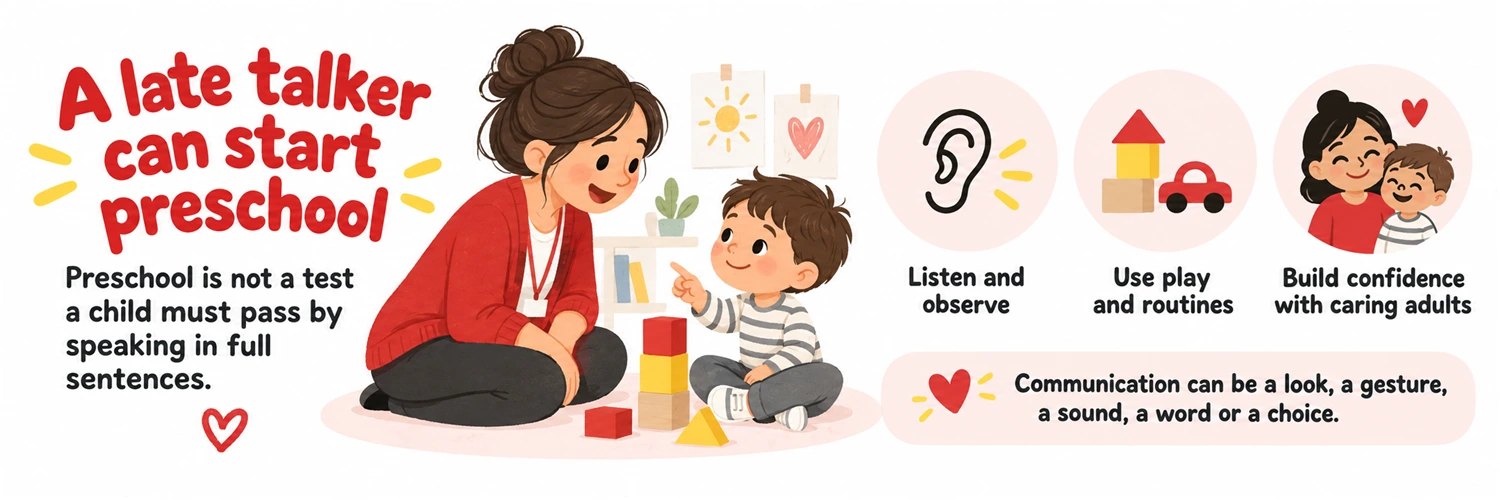
Starting preschool is not a test a child must pass by speaking in full sentences. It is one environment where children can listen, observe, play, communicate in different ways and gradually build language with caring adults and peers.
Can a Late Talker Go to Preschool?
What Does “Late Talker” Mean?
“Late talker” is a useful parent description, not a diagnosis. It generally refers to a young child whose spoken language is developing more slowly than expected for their age.
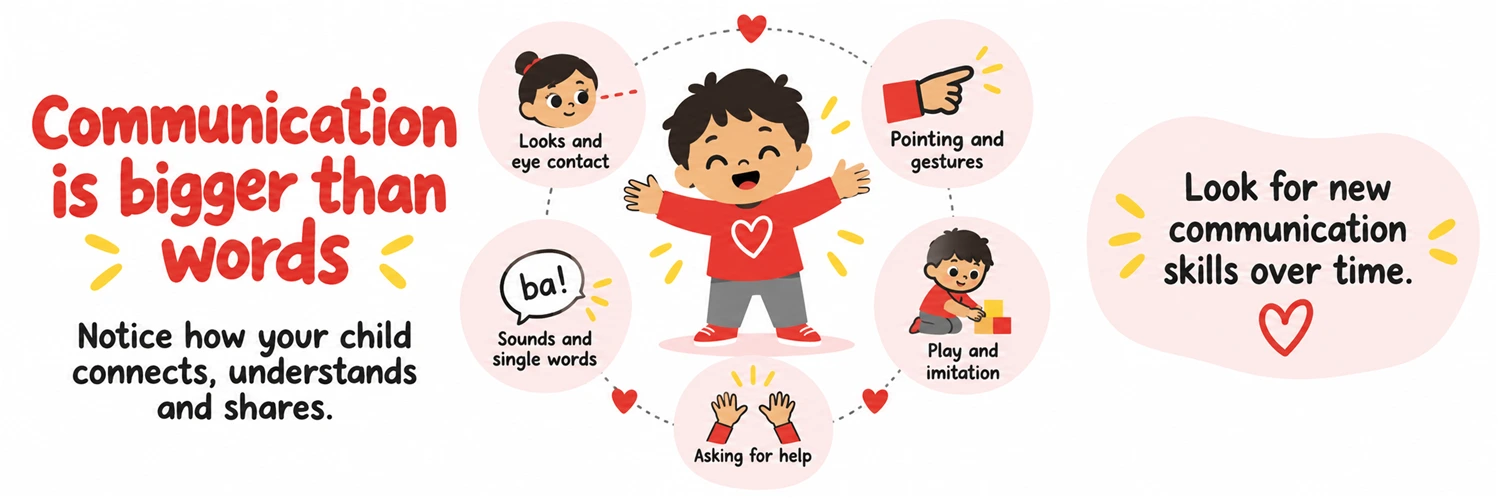
Some children understand a great deal but use only a few words. Others use gestures, sounds, pointing, eye contact, facial expressions or single words to communicate. Some children learn words in more than one home language. These differences matter when professionals assess communication.
Language development is not only about how many words a child says. It also includes:
- How well they understand everyday language
- Whether they respond to names, gestures and routines
- How they use eye contact, pointing and facial expressions
- Whether they try to share interests or ask for help
- How they play, imitate and interact with others
- Whether they are gaining new communication skills over time
The American Speech-Language-Hearing Association notes that some late talkers catch up, while others may need ongoing support. That is why early assessment and regular monitoring are more useful than labels or comparisons.
How Do You Know if a Late Talker Is Ready for Preschool?
A thoughtful preschool can offer many opportunities for language without putting a child under pressure.
Children hear words during everyday routines: “Wash hands”, “Choose a block”, “Your turn”, “Snack time”, “Let’s put the book back.” They hear language during songs, stories, outdoor play, art, pretend play and group activities.
They also watch other children communicate. A child may not join the conversation immediately, but they can learn by observing a peer ask for a toy, explain a game or sing a familiar rhyme.
At Dhruv Preschool, part of the Dhruv Group of Schools, with branches across Pune and Vadodara, play-based experiences give children many natural reasons to communicate. A teacher can describe what a child is doing, offer choices, wait for a response and build on the child’s attempt to connect.
For example, if a child points to paint, a teacher might say, “Blue paint. You want blue.” If the child says “car”, the teacher can respond, “Yes, the red car is going fast.” This supports language without making the child feel tested.
A helpful preschool environment includes
- Teachers who speak warmly and clearly
- Visual routines and predictable transitions
- Small-group and play-based learning
- Time for a child to respond
- Acceptance of gestures, pointing and home-language words
- Regular, respectful parent communication
Can Preschool Help a Late Talker Develop Language?
Parents looking for the best preschool in Pune often focus on whether their child can speak clearly, recite rhymes or answer questions in English. These are not the only measures of readiness.
A child may be ready to begin if they can gradually manage some separation from a caregiver, show interest in people or play, communicate needs in some way and cope with a short, supported routine. They do not need to be toilet trained, fluent in English or socially confident from day one.
Some children will need a slower settling-in period. Others may benefit from a shorter initial day, a familiar comfort object, visual cues or extra teacher communication. This is not lowering expectations. It is giving a child a fair start.
7 Questions to Ask a Preschool Before Admission
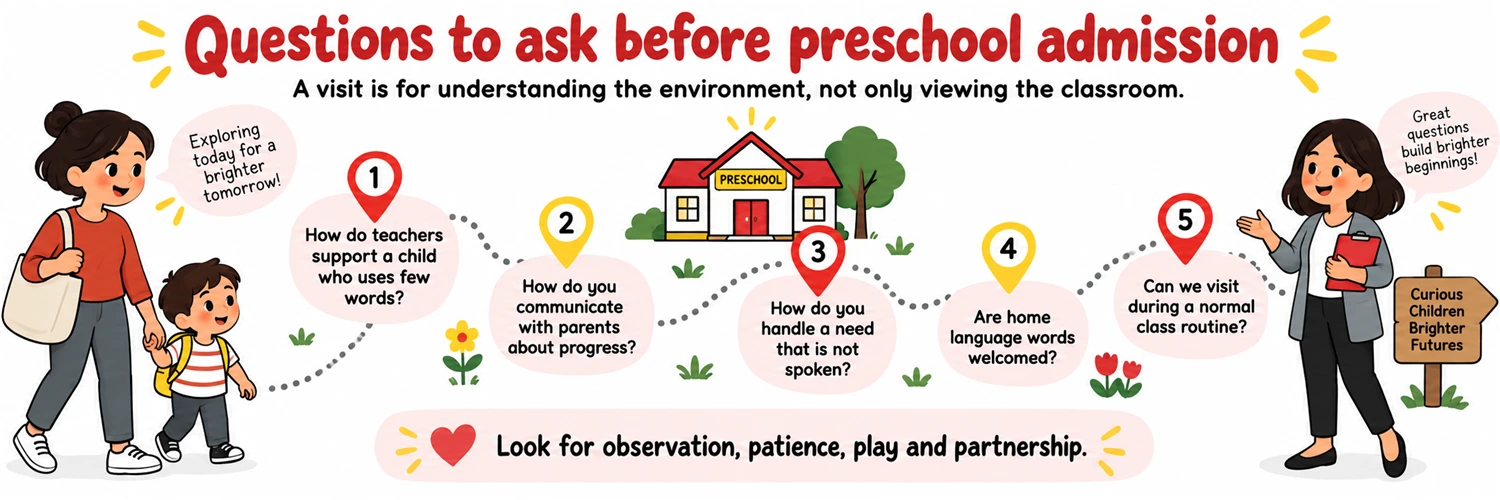
A school visit is your chance to understand the environment, not just view the classroom.
Ask these questions:
1. How do teachers support a child who uses few words?
Look for answers about observation, gestures, modelling language, waiting, visual cues and play.
2. How do you communicate with parents about progress?
Ask how often teachers share observations and whether they can discuss specific communication goals.
3. How do you handle a child who cannot yet explain a need verbally?
A good answer should include noticing body language, offering choices and teaching simple functional words.
4. Are children expected to speak only English?
A supportive early-years setting respects a child’s home language while gradually introducing English through routine and play.
5. How do you help a child settle into group activities?
Ask about small groups, teacher support and gradual participation.
6. What happens if teachers notice a developmental concern?
Schools should share observations sensitively and encourage parents to speak with qualified health professionals. A school should not diagnose a child.
7. Can we visit during a normal class routine?
Watch whether teachers get down to children’s eye level, respond patiently and include quieter children.
Should You Practise Speaking Before Preschool Starts?
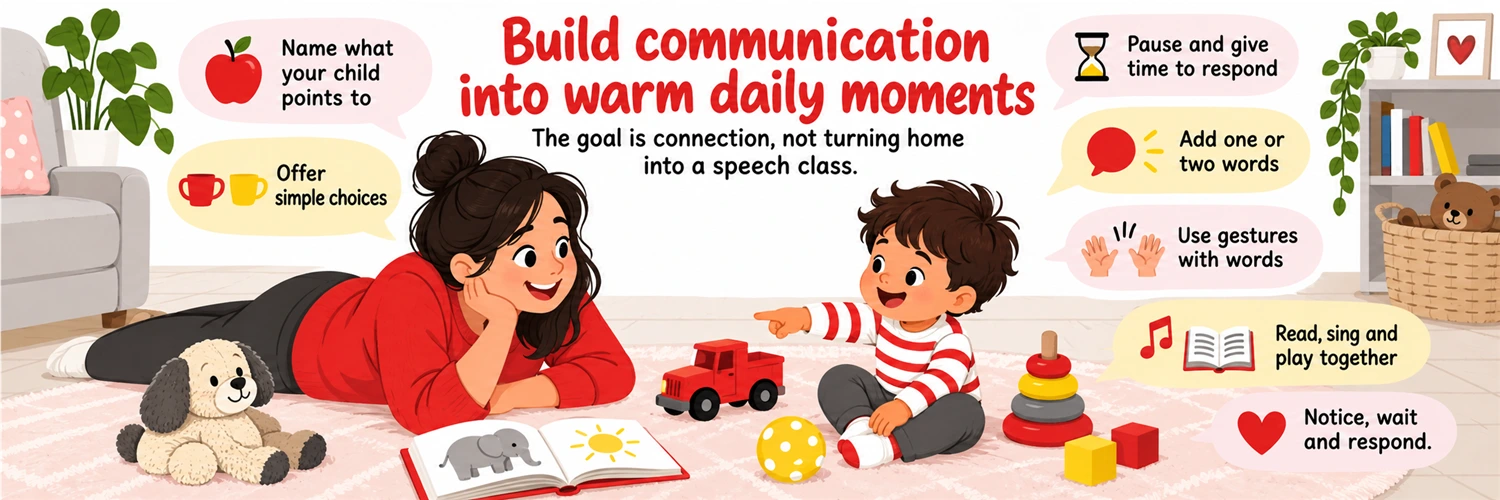
You do not need to turn home into a speech class. Build communication into warm daily moments.
Try these simple approaches:
- Read a familiar picture book and name what your child points to.
- Offer choices: “Apple or banana?”
- Pause after asking a question; give them time to respond.
- Describe actions during play: “The train is rolling.”
- Share short updates with the teacher about favourite objects, comfort routines and useful words in your home language.
The goal is connection. More talking with a child is not always better. Responsive conversation, where you notice, wait and respond, is what helps communication feel worthwhile.
Can a Child Start Preschool if They Don’t Speak English?
Many Pune families use Marathi, Hindi, English and other languages at home. A child who is learning more than one language may divide words across those languages. This is not automatically a language delay.
Continue using the language in which you can be most warm, expressive and responsive. Your child needs rich conversations, family stories and emotional connection. These are easier when adults use language naturally.
Share key home-language words with teachers, especially for comfort, food, toilet needs, family members and favourite activities. Over time, the child can connect words across settings.
When Should You Seek Support?
Trust your concern. Talk with your child’s paediatrician if you notice that your child is not gaining communication skills, has lost words or skills they once used, struggles to understand familiar language, rarely uses gestures to communicate, or if you have concerns about hearing, play, social interaction or development more broadly.
The CDC advises parents to share concerns and ask about developmental screening when a child is not meeting milestones or has lost skills. A paediatrician may recommend hearing assessment, developmental screening or referral to a speech and language professional.
Getting support does not mean you have failed as a parent. It does not mean preschool is impossible. It means you are gathering useful information and giving your child the right help early.
Bring these notes to the paediatrician
- Words, sounds or gestures your child uses
- Languages used at home
- What your child understands
- Changes you have noticed over time
- Hearing or ear-infection concerns
- Notes from caregivers or teachers
- Any skills your child has lost
What to Avoid
Try not to compare your child with siblings, cousins or classmates. Language growth has a wide range, and comparison can make children feel observed rather than understood.
Avoid forcing repeated answers. Instead of saying, “Say ‘ball’,” you might say, “Ball. You found the ball.” Your child may repeat it, point, smile or move on. Each communication attempt is useful information.
Do not wait indefinitely if you are worried. Reassurance is valuable, but assessment can give you clarity.
Final Thoughts
A child who speaks less is still communicating. They may be showing you through a look, a gesture, a picture, a sound, a choice or a quiet observation. The best next step is not to panic or wait alone. It is to notice carefully, ask thoughtful questions and build a team around your child. Preschool can be part of that team.
FAQs
Will preschool make my child talk?
Should I delay preschool until my child speaks more?
Not always. For many children, a warm, well-supported playgroup or preschool routine can be beneficial. Discuss your child’s individual needs with the preschool and your paediatrician.